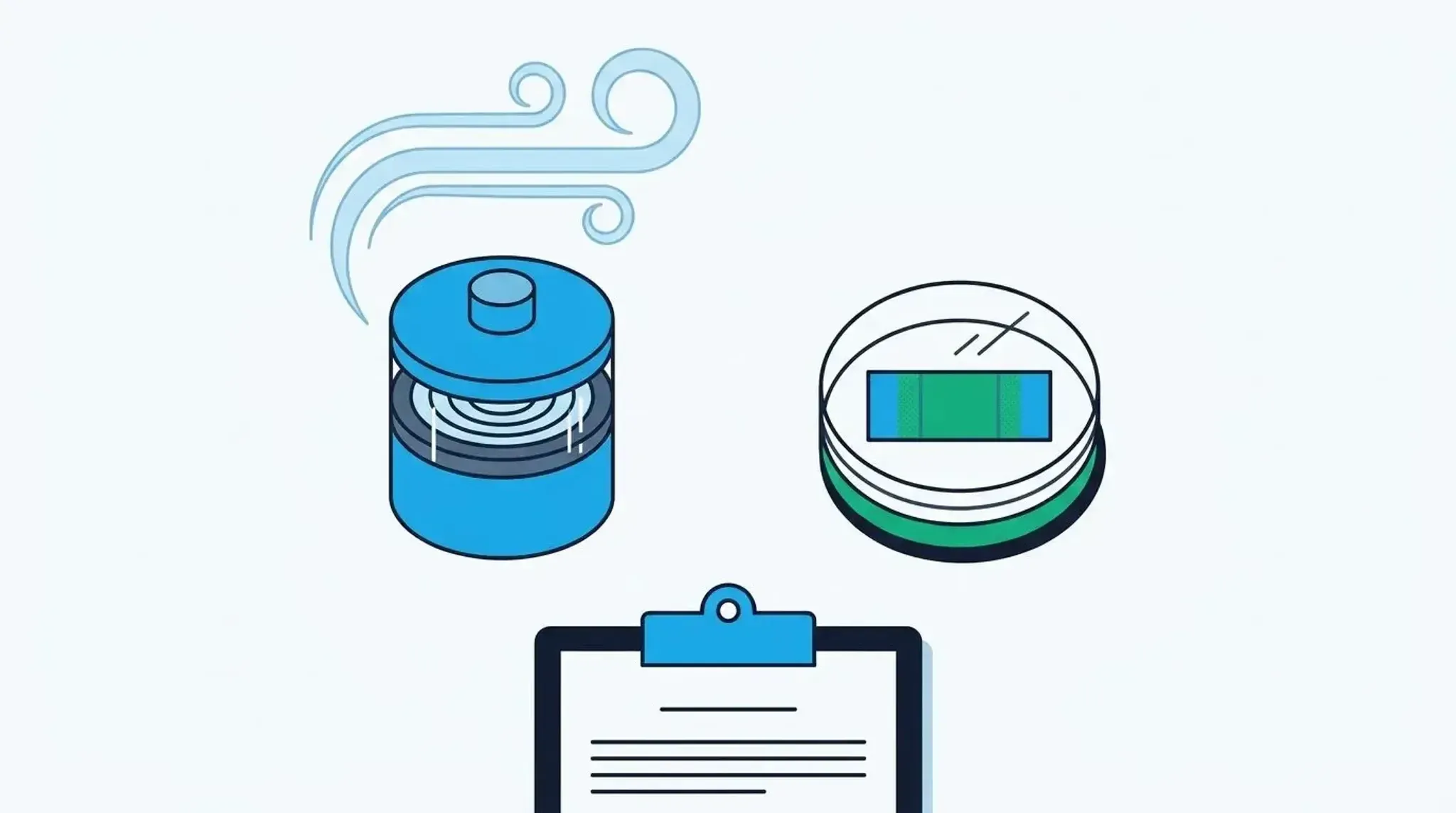

A mold air sample measures how many mold spores are floating in the air of a room and identifies the genera present. A mold surface sample physically lifts material from a visible spot and confirms whether it's mold along with the species. The two tests answer different questions, so they're rarely a one-or-the-other choice. On a real inspection, a certified inspector usually runs both, then compares the results against the outdoor baseline and against the lab's library of mold species.
This guide walks through what each sample measures, when each is the right call, and what a real inspection actually looks like, so you can book the right test the first time instead of paying for a second opinion.
Mold air sample vs. surface sample — the short answer
An air sample tells you what's in the air you're breathing. A surface sample tells you what's on the spot you're worried about. If there's a visible patch, a surface sample confirms what it is. If the issue is a musty smell or unexplained symptoms with no visible mold, an air sample finds spores you can't see. Most real-world cases call for both methods in the same inspection.
| Test | What it measures | When to use it |
|---|---|---|
| Mold air sample (spore trap) | Spore count per cubic meter of air, plus the genera present | Musty smell, suspected hidden mold, post-water-damage, symptom-driven testing |
| Mold surface sample (tape-lift / swab / bulk) | Whether a visible spot is mold and which species | Visible discoloration, confirming what a patch is before remediation quotes |
| Both together | Airborne load plus a confirmed species at the source | Tenant disputes, real-estate transactions, health-symptom cases, anything that may go on a report |
The air-vs-surface choice is the most common decision a homeowner faces before booking. The decision table further down maps the four most common scenarios to the right starting point. Either way, both tests get analyzed at the same AIHA-LAP (EMLAP) accredited lab and come back inside the same report.
What a mold air sample actually measures
A mold air sample uses a spore trap, a small cassette with a sticky slide inside, connected to a calibrated pump. The pump pulls a measured volume of air (usually 75 to 150 liters) across the slide for about five minutes. Anything airborne sticks: mold spores, pollen, skin cells, fiber fragments. The cassette goes to the lab, where an analyst counts spores per cubic meter and identifies the genera.
The number alone doesn't mean much. What matters is the comparison: the indoor sample is read against an outdoor "baseline" sample taken the same day at the same property. If the indoor count is meaningfully higher than the outdoor count, or if certain water-indicator genera (Stachybotrys, Chaetomium, Fusarium) show up indoors but not outdoors, that points to an indoor mold source.
Air samples are the right tool when you can't see mold but suspect it. A musty smell with no visible patch. A bedroom where someone wakes up congested. An air-handler closet that always feels off. The spore trap doesn't need a target. It tests the air itself.
What an air sample doesn't do well: pinpoint where the source is. It tells you whether something elevated is in the air. To find the source, an inspector pairs the air result with thermal imaging, moisture readings, and surface samples from suspect areas.
For background on how the federal government frames mold in indoor air, the EPA's mold pages are the most-cited public resource.
What a mold surface sample actually measures
A mold surface sample is a physical sample of material from a specific spot. The lab confirms whether the material is mold and identifies the species. Three common methods cover most situations:
- Tape-lift. A piece of clear adhesive tape is pressed to a visible spot and lifted. The tape preserves the mold's structure (spores, hyphae, fruiting bodies) for the lab to identify under a microscope. This is the standard surface method for a discrete patch on drywall, wood, tile grout, or HVAC.
- Swab. A sterile swab is rubbed across a suspect area, then sealed in a transport tube. Useful for porous or textured surfaces where tape doesn't adhere cleanly.
- Bulk. A small piece of the material itself (drywall, insulation, carpet fiber) is cut out and bagged. Bulk is the most definitive for "what species is growing in this exact material" but it requires cutting into a surface, so inspectors use it when tape-lift or swab won't answer the question.
A surface sample confirms two things an air sample alone can't: that the visible material is in fact mold (it might be mildew, soot, or dirt), and which species it is. Species ID matters for the next conversation. Stachybotrys chartarum on wet drywall calls for a different remediation scope than Cladosporium on a window seal.
Surface samples are less useful for hidden mold. If the source is behind a wall or in an attic crawlspace, there's nothing visible to sample.
The CDC's mold basics page covers the species and health framing in plain language for non-clinical readers.
When to use which — a decision framework
Match the symptom to the starting test. The table below covers the four scenarios that show up most often in our intake.
| Situation | Best first test | Why |
|---|---|---|
| Visible spot, no symptoms | Surface sample | Confirm what the patch is and the species before any remediation quote |
| Musty smell, no visible mold | Air sample | The source may be hidden; spores show up in the air even when nothing is visible |
| Health symptoms in a specific room | Air sample, then surface where the air points | Air finds elevated genera; surface confirms the source when located |
| Tenant or landlord dispute, real-estate hold-up | Both, paired with thermal imaging | A defensible report needs airborne load plus a confirmed source |
The fastest way to waste a sampling budget is to test the wrong way for the situation. A visible black patch on the basement wall doesn't need an air sample first. A tape-lift will tell you what it is in 1-2 business days. A musty bedroom with no visible patch doesn't need surface samples until the air result tells you where to look.
For most professional inspections, the inspector defaults to running both at the property and lets the result decide where to dig next. That's also what makes a report hold up if it ever needs to.
What a real inspection actually does
A certified mold inspection isn't one test. An IICRC- or NORMI-certified inspector usually runs both methods on the same visit: air samples from the affected rooms plus an outdoor baseline, surface samples from any visible spots, thermal imaging to find moisture behind walls, and moisture-meter readings on suspect surfaces. The samples ship to an AIHA-LAP (EMLAP) accredited lab, and the report comes back together, not as separate tests.
At Fast Mold Testing, we run that combined process on every visit because partial sampling produces partial reports. Lab results come back in 1-2 business days via our AI-assisted lab analysis, faster than the 5-14 business days that's typical for the category. The report is a single interactive web document: sample-by-sample, with photos, the outdoor baseline, the species ID, and recommendations.
We test. We don't remediate. Because we don't quote cleanup work, the report doesn't have an incentive to find more mold than is there, and that's the reason the conflict-free model exists in the first place. After the report, you choose the remediation contractor.
Air vs surface vs ERMI vs DIY — quick bridge
The air-vs-surface pair is what an inspector runs at the property. ERMI (Environmental Relative Moldiness Index) is a separate, mail-in dust panel that uses DNA sequencing on a settled-dust sample to estimate the historical mold burden of a home. DIY mold test kits answer a much narrower question (is this material mold or not) without the spore counts, species ID, or outdoor baseline that a real report needs.
ERMI is its own decision and gets a full air-vs-ERMI comparison on our blog. For the air-and-surface combo, the published mold inspection cost guide spells out what's included at each tier: no quote calls, no hidden fees. DIY kits cost $10 to $50 and ship lab results in 5 to 14 days, with no inspector visit; they're useful when "is it mold or mildew" is the only question.
Where to go from here
If you can see a patch and want to know what it is, a surface sample is the right first step. If something smells off and you can't find the source, an air sample is. If you're not sure or the report needs to hold up for a landlord, a buyer, or a health concern, book the full combined inspection. We test, we don't remediate, and the report is yours to take to any remediation contractor you choose. The math on testing is short, and the science isn't a guess: the IICRC sets the certification standards our partner inspectors hold, and the AIHA-LAP (EMLAP) program accredits the lab that reads every sample.
What the EPA and CDC say about mold
Moisture is the one controllable factor. The U.S. Environmental Protection Agency advises keeping indoor relative humidity below 60 percent — ideally between 30 and 50 percent — to deter mold growth, and the Centers for Disease Control and Prevention reports that indoor dampness and mold are linked to upper respiratory symptoms in otherwise healthy people.
“Molds can be found almost anywhere; they can grow on virtually any substance, providing moisture is present.”
U.S. Environmental Protection Agency — epa.gov/mold
Sources
- U.S. Environmental Protection Agency (EPA) — Mold
- Centers for Disease Control and Prevention (CDC) — Mold and Dampness
- AIHA Laboratory Accreditation Programs (AIHA-LAP, EMLAP)
- Institute of Inspection, Cleaning and Restoration Certification (IICRC)
Book a certified mold inspection and the report lands in 1-2 business days.
Frequently Asked Questions
- Is an air sample or a surface sample more accurate for mold?
- Neither is more accurate; they measure different things. A surface sample is more accurate for 'is this patch mold and what species?' An air sample is more accurate for 'are there elevated spores in this room's air?' Most professional inspections run both so the report can answer both questions and stand up under scrutiny.
- Can a mold air sample miss mold that's actually there?
- Yes. Air samples can miss mold that isn't actively releasing spores at the moment of testing. Dormant growth, mold sealed behind a vapor barrier, or growth in an unventilated cavity may not show up in a spore trap. That's why inspectors pair air sampling with thermal imaging, moisture readings, and visible-spot surface samples on the same visit.
- How much does a mold air sample vs surface sample cost?
- Pricing depends on the number of samples and the inspector's package, not just the method. Most professional inspections run $400 to $1,500 across the typical range, which usually includes both air and surface samples plus thermal imaging. We publish our flat-rate inspection pricing; see the mold inspection cost guide for the current numbers.
- Do you need both an air sample and a surface sample?
- In most real cases, yes. A surface sample alone can't tell you whether spores are airborne at unhealthy levels. An air sample alone can't tell you which species is on a visible patch. A defensible report for a tenant dispute, real-estate transaction, or health-symptom case almost always needs both, paired with an outdoor baseline.
- What does a surface sample tell you that an air sample can't?
- A surface sample tells you the specific species growing on a specific spot. Stachybotrys chartarum on wet drywall is a different problem than Cladosporium on a window seal, even though both might show up in the same room's air. The species ID also helps with insurance claims, remediation scoping, and any documentation that needs to be specific about what was found and where.
- How long does it take to get results from a mold air sample?
- Lab turnaround for mold air samples is typically 1-2 business days at FMT via our AI-assisted lab analysis, against 5-14 business days as the industry standard. The inspection visit itself runs about 60 to 90 minutes. Most homeowners book on a Monday or Tuesday and have the interactive web report by mid-week.