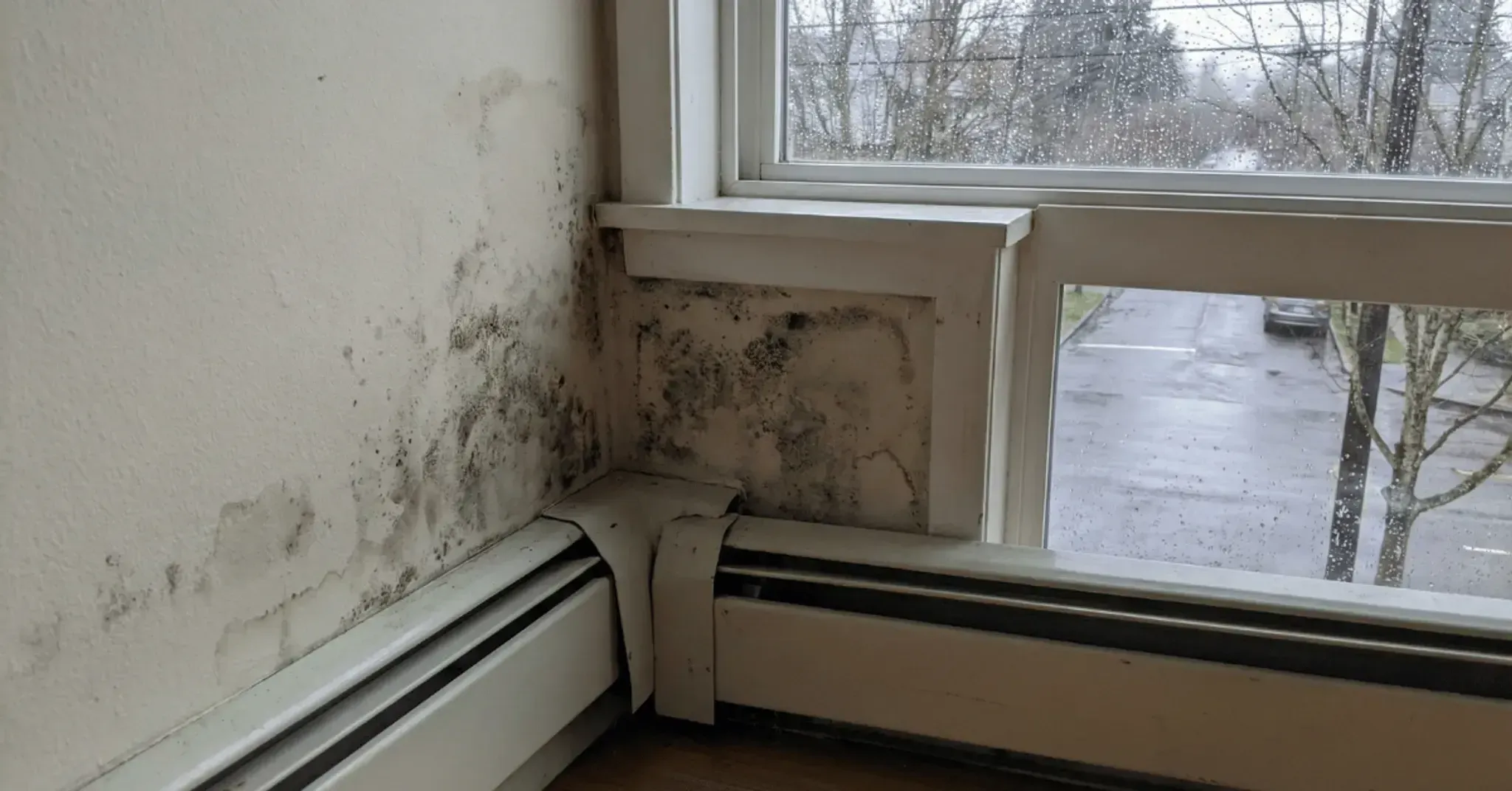

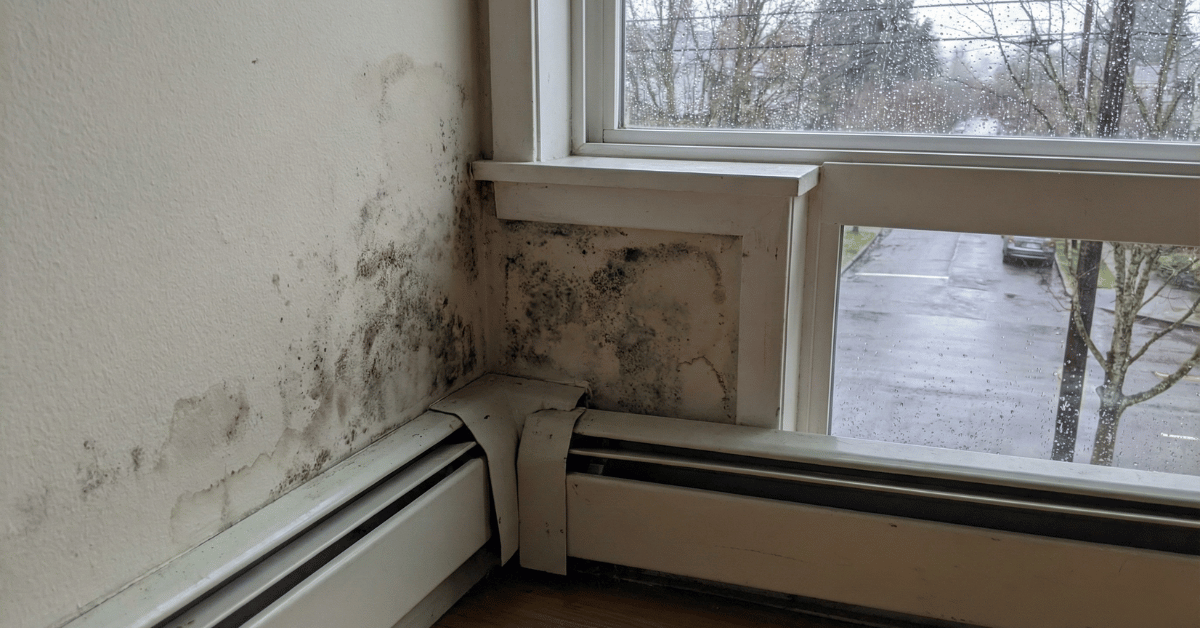
The dark fuzz on your aluminum window frame this winter is almost always not toxic mold. The reason is not that Seattle is dry. It is because the fungi on cold metal frames are nothing like the fungi that make people sick. Cladosporium grows on your windowsill. Stachybotrys chartarum, which is behind news about toxic black mold, does not. To know what to do, you should understand what each mold needs. That is how you decide if you can wipe it away with a damp cloth, or if you need a mold inspection in Seattle.
Why Cold Aluminum Frames in Seattle Almost Always Grow Cladosporium
Aluminum lets cold pass about 1,000 times faster than wood. On a January morning in Seattle, a single-pane aluminum frame gets almost as cold as it is outside, while the room stays at 68°F. This difference makes water come out of the air inside and form on the aluminum. This happens from October to March in most homes in Seattle.
According to a Pacific Northwest home ventilation study, 72% of homes in western Washington had water on their windows, and one in three homes had mold near the window frames. Old Seattle homes, like those in Rainier Valley and the older apartments in U District, showed even more problems. The frames are thin and old seals let water gather in more spots.
What helps mold grow is not the aluminum. The metal does not give mold anything to eat. Mold feeds on the thin layer of house dust on a wet surface. Spores land in that dust. They find water below them and start to grow.
The species doing this is almost always Cladosporium. The CDC identifies Cladosporium as the most common indoor mold in the United States, and it is much more common inside than Stachybotrys. Cladosporium grows when the surface humidity reaches at least 55%. It can also grow when temperatures are as cold as 39°F. This is the same kind of weather you will find with a Seattle aluminum window frame during winter. It may cause allergy symptoms or make asthma worse in some people, but it does not give off mycotoxins.
What Stachybotrys Needs That a Seattle Window Frame Never Gives
Stachybotrys chartarum is the kind of mold people talk about when they mention toxic black mold. It can show up in Seattle homes. But it has some needs that are so exact that a window frame almost never has those things.
Per the CDC's Stachybotrys chartarum fact sheet, this type of mold needs things with high cellulose. It grows on fiberboard, drywall, paper, and wood. It needs steady moisture, not just a short damp that goes away by noon. It grows where air does not move, and where there is no light, like behind walls or under floors. Nothing stops the wetness there, so the mold keeps growing.
Seattle's outdoor air is not as wet as many people think. The air coming in from the ocean has already lost most of its water while crossing the cold sea. Building scientists say that in western Washington, using outdoor air can help lower indoor dampness almost any day of the year. The outside dew point here almost never goes over 52°F, even during the rainiest months.
A window frame that gets wet in the morning but dries by 11 a.m. will not hold Stachybotrys. It needs moisture that stays hidden for weeks. A slow roof leak or a pipe dripping inside a wall or a broken crawl space vapor barrier. These are what it needs. These things happen in Seattle homes, but they almost never happen on a window sill.
How to Tell If You Have a Cleaning Task or a Mold Inspection Problem in Seattle
Cladosporium on a window frame does not have any smell in the room. If you put your nose near the frame, you might notice a weak smell. It is a bit earthy. If you open the window and wipe the sill, the smell will go away. The mold grows flat and dry in the corners of the frame. You can see it in the gasket channel and sometimes on the rubber seal.
Stachybotrys has a strong smell that does not leave, even if you wipe it. The room keeps this heavy and wet smell, and it stays there even with open windows. This mold spreads where there is water. You may see it along a baseboard when there is a slow water leak. It can move across walls when the roof flashing does not work. You may find it going up a wall when the crawl space below gets wet.
The Washington State Department of Health says if the odor will not go away or if you see marks on wall materials, you need a professional check, not just surface cleaning.
Location is the easiest way to see what the problem is. If there is growth on the aluminum frame, the glass near the frame, or the rubber seal, it is most likely surface mildew. Growth at the bottom of the drywall under a window, inside the wood casing, or coming from a wall corner means there is a different moisture source. Something inside the wall is wet. Wiping the surface will not fix this.
The EPA's mold cleanup guide says that if mold covers more than 10 square feet, you should call a professional for help. If the area is smaller, and on surfaces that are not porous, you can clean it yourself. But if the mold is bigger, or it is on things like wood or drywall near the frame, a mold inspection in Seattle will show what is there and how far the water has traveled.
For people who rent in Seattle, a report that uses lab results shows what the renter needs to take care of and what the owner is responsible for under Washington State law. Our post on landlord-tenant disputes explains how lab facts help clear up mold problems between renters and owners in Seattle rental homes. This tells you how these papers work in real life situations.
Why Humidity Control Does More Than Any Cleaning Product
Bleach seems like it works on mold found on windows. The black mold turns gray in just a few minutes after you use it. But on the gaskets and in the frame corners, where mold is deep down, bleach does not reach the base of the mold.
The color goes away, but you still see it in the gap. After two weeks, the spot turns black again.
White vinegar can kill more than 80% of common mold types. It lowers the pH, which breaks down their cell walls. Use the vinegar without adding water. Let it sit for 10 minutes. Scrub the corners, then dry the frame. Drying is just as important as using the vinegar. If you leave the frame wet, mold can grow back very fast.
The real problem is the difference in temperature that makes water form. Cladosporium needs that gap to keep things damp. If you make the gap smaller, that takes away where it can grow.
The EPA recommends keeping indoor humidity between 30% and 50% to help stop mold from growing on surfaces inside the house. This is important for Seattle homes, especially in winter. If the humidity is at 50%, you will see a big drop in water forming on cold metal frames. If the humidity gets down to 40%, that water almost goes away.
King County Public Health keeps an eye on indoor air quality in Seattle homes and says, keeping moisture down is the best way to stop mold. A hygrometer is easy to find at any Seattle hardware store. It costs about $15. You can use it to see the real numbers for how much moisture is in the air.
Running bathroom fans for 30 minutes after you shower and turning on a range hood when you cook will make a bigger difference than any cleaning product. In newer homes built after 2000 around Ballard or South Lake Union in Seattle, you can feel this change more. These homes seal tight. The water from normal routines stays in the air if you do not turn on fans to move it out.
For a simple checklist for fall that looks at windows, bathrooms, attics, and crawl spaces in different Seattle homes, the Seattle mold inspection checklist shows you what certified inspectors check each season.
Mold Testing Seattle: Common Questions
Can a lab test tell the difference between common window mildew and Stachybotrys if they both look dark?
Yes. A surface swab or tape lift, checked by a certified lab, can show the exact type of mold. The lab looks at the spore shape and cell under a microscope. You cannot be sure just from color; Cladosporium and Stachybotrys both look like dark spots. If you had water near the window and want a clear answer rather than just a guess, a surface sample is the best way. An air sample from the same room tells you if the spore levels are normal compared to outside or if there may be an active mold patch growing close by.
My window sill mold came back within two weeks of cleaning. What does that signal?
If weeds or mold come back in two weeks, it usually means that their roots are still alive. Cleaning the surface takes away what you can see, but the rest of the group stays hidden in the lines of the gasket or in the corner of the frame.
If the new growth shows up in another spot each time and not in the same corner, this means something else is happening. It shows there is some water coming from behind the sill. Look at the seal around the frame and the caulk line where the frame meets the wall. If you see a gap, rain or water from the wall can get in and wet the sill again. That means cleaning it on the surface will only be good for a short time.
Are there Seattle neighborhoods where structural mold is more likely based on housing type?
Yes, the pattern matches the time when the homes were built. Slab-on-grade homes built in South Seattle, Beacon Hill, and West Seattle from the 1950s to the 1970s usually have more problems with moisture in crawl spaces. Back then, people did not use vapor barriers as standard practice. Older Craftsman homes in Capitol Hill, Wallingford, and Fremont often have crawl spaces that are not conditioned and vents in the foundation that do not work well.
Newer buildings in Belltown and South Lake Union face other issues. The vapor barriers do their job. But the air vents do not work well. When people do not always turn on the fans, steam from cooking and showers stays inside the walls.
What does an elevated air sample result mean when there is no visible mold in the room?
Airborne spore counts are high when compared to outside levels, even if you do not see mold. This often means one of two things. A colony may be growing in a place you cannot see, like inside an HVAC coil, behind a wall, or in the crawl space under the room. Or, something was moved or touched recently and sent spores into the air, but the area was not cleaned.
A second check to match air data with water readings found inside walls can help find where the problem comes from. In Seattle homes, hidden things tend to show up in crawl space frames, bathroom wall spaces, and attic boards. This is mostly near bath fans that blow air into the attic instead of outside.
If an inspection confirms only Cladosporium on aluminum window sills, what does the report mean for next steps?
The main point about that result is not about which kind grows. It is more about where it is growing. Cladosporium on aluminum or glass shows that the colony does not have any porous thing to get into. A homeowner can clean it without a problem.
The report changes when the same kind shows up on drywall, wood casing, or framing close to the window. These materials let roots grow deeper, where cleaning only on top will not get them all. If the person who checks the area also finds high moisture levels inside the wall near the window, this means more than just knowing the kind of growth in the report.
Bottom Line
The mold on your window sill is not the kind that you have to worry about. It grows where you can see it and you can reach it. It is in a place that gets dry every afternoon. It will go away if you use vinegar and make the air less damp.
The mold inside walls, under floors, and in crawl spaces often goes unseen. It can grow for years in places that stay wet. The mold from there can't be seen or smelled until the group of mold gets big enough to send a smell through the wall. By the time you notice it, that mold has been there for a long time.
A professional mold inspection in Seattle is not just about what you can see. It is about finding things you cannot see.
Frequently Asked Questions
- When does Seattle window mold actually require a professional mold inspection?
- Seattle window mold requires a professional inspection when it returns within a few weeks of cleaning, when moisture readings on the surrounding wall are elevated, when there is a musty odor even after the window surface is cleaned, or when the mold extends beyond the window frame onto the adjacent wall or ceiling. Surface condensation mold on the glass itself is usually a ventilation issue, but mold spreading to building materials indicates a more serious moisture problem.
- What causes window mold in Seattle and when is it a building problem versus a ventilation issue?
- Seattle window mold on glass and frames is usually caused by indoor humidity condensing on cold glass surfaces during cool months, which is a ventilation issue resolvable with better airflow and humidity control. When mold appears on the wall surrounding the window, on the window sill's wood substrate, or inside the wall cavity adjacent to the window frame, it indicates water infiltration through the window seal or flashing, which is a building defect requiring professional assessment.
- How much does a mold inspection cost in Seattle for a window mold concern?
- Mold inspections in Seattle that focus on window areas typically cost between $500 and $800 (more for extensive inspections). Fast Mold Testing starts at our transparent rate with results in 1 to 2 business days. The inspection uses moisture meters on the window frame, surrounding drywall, and the wall cavity to distinguish between surface condensation mold and infiltration-related mold that requires building repairs.
- Can Seattle landlords blame tenants for window mold caused by building envelope failures?
- Seattle landlords sometimes attribute window mold to tenant lifestyle choices like cooking or showering without ventilation. A professional mold inspection from Fast Mold Testing that shows elevated moisture readings inside the window frame or wall cavity adjacent to the window establishes that the source is water infiltration through a building failure, not condensation from tenant behavior. This finding is what distinguishes a building defect claim from a tenant responsibility argument under Washington State law.