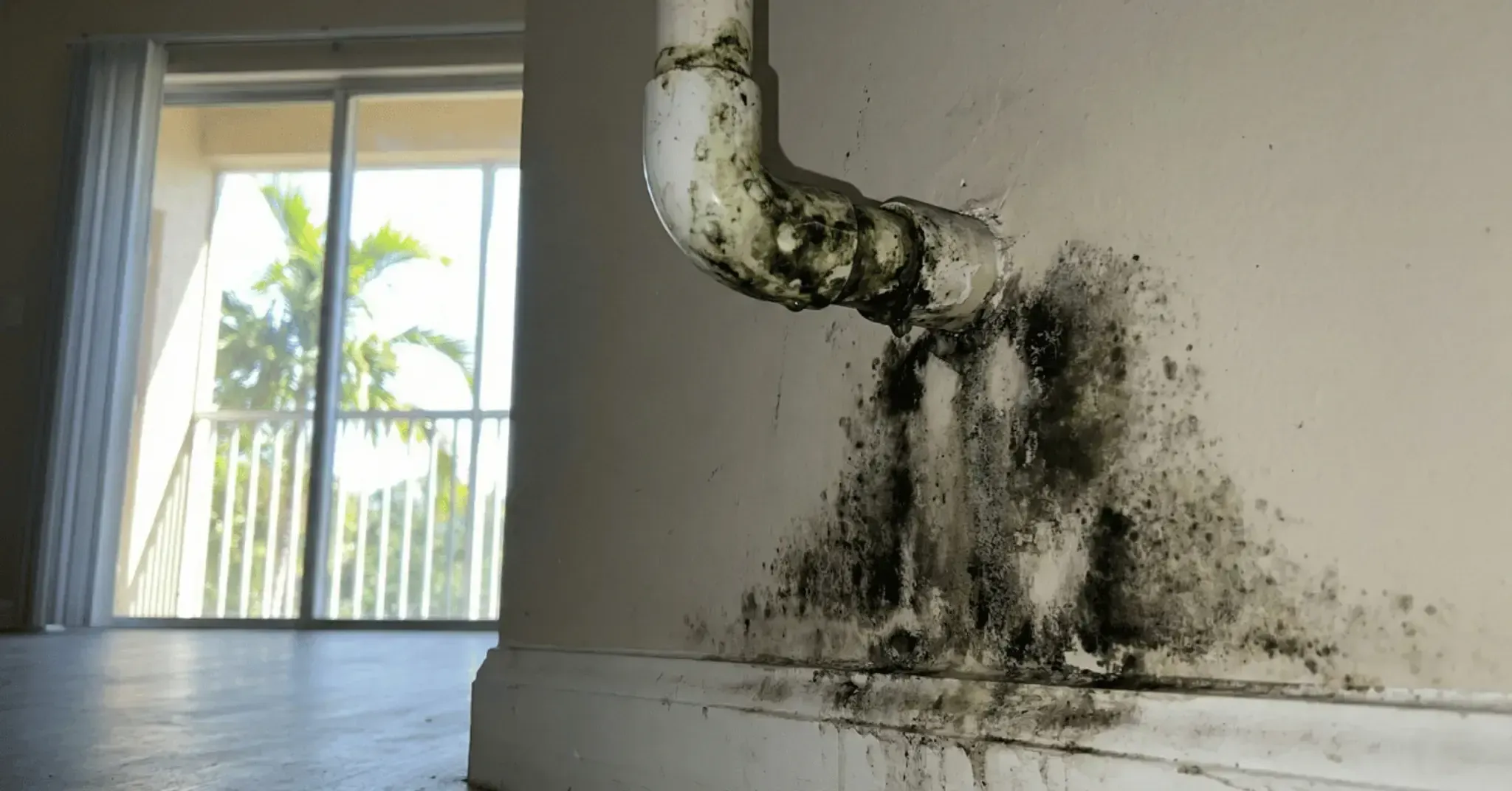

The apartments that have mold behind the headboard are not always cold. In fact, most are warm with the heat on all winter. You turn on the thermostat, and the baseboard heaters start each morning. The room stays warm. In January, you move the nightstand away from the wall and then see the mold.
Warmer air inside can hold more water in it. When there is more vapor, there is more moisture that can drop on one spot your heater cannot get to. This spot is the cold wall behind your furniture. Your heater works fine. This happens because baseboard heat moves air in a certain way. Understanding this is the only thing that will help you stop it next time.
Why Seattle's Baseboard Heaters Create Cold Mold Zones Behind Furniture
Electric baseboard heaters warm up a room by moving air. The heater gets hot, and this makes the air above it warm. That air goes up toward the ceiling. The cooler air near the floor moves in to take its place. This loop works well for heating the open area in the middle of the room.
It does not get behind furniture that is up against the wall. The furniture stops the flow of air. The air in the small space between your bookcase and the outside wall stays cold and does not move. Mold experts call this a dead air zone.
In Seattle, many apartments built before the 1970s have walls that do not have much insulation inside them. On a night when it's 40°F outside in places like Capitol Hill or Queen Anne, the inside part of the wall can feel as cool as 50 to 54°F. Heated apartments in Seattle usually have air at about 68°F, and the air holds between 50-60% humidity. When the air inside is 68°F and the humidity is 55%, the dew point is close to 50°F. The dew point is the temperature when water in the air starts to come out and stick to surfaces that it touches.
When warm, wet air moves into the cold space and touches the wall, it meets a spot that is almost at its dew point. Water comes out of the air then. It lands on things like drywall, the back of your headboard, and the back of your bookcase. The Washington State Department of Health says that mold can start to grow after just one day when water forms on something made from natural things. Drywall, fabric, leather, and particleboard can all be affected. This cold gap makes the perfect place for mold all through a Seattle winter every night.
Your Baseboard Heater Doesn't Just Fail to Prevent Moisture. It Adds to It.
In Seattle, the outdoor humidity is usually above 75% from November to March. This number comes from NOAA climate data at Sea-Tac Airport. That moisture outside does not just stay there. It can get in through spaces by windows and doors. You also add more water to the air inside when you cook, take a shower, or even breathe.
Forced-air HVAC systems move air through the ducts. This makes the moisture move, and some of it leaves through the return vents. Electric baseboard heaters do not make the air move at all. They just heat the room and leave the moisture in the same place.
Most renters do not notice this. If you keep your baseboard heat on all the time, the moisture in your apartment goes up, not down. Warm air can hold more water in it. A room at 70°F has more water in the air at the same humidity level than a room at 62°F. The moisture does not go anywhere. It stays in the apartment. Over time, it builds up until it reaches a cold surface.
In a well-sealed Seattle rental during winter, that cold spot is the wall on the outside behind the furniture you have not moved since you unpacked.
The 4-to-6-Inch Furniture Gap Works Because of Wall Temperature, Not Fire Safety
The gap rule is in place for a simple reason. It lets the convection loop get to the wall. This makes the temperature on the wall go up and be higher than the dew point. That’s how it works.
When you leave about 4 to 6 inches of open space between your furniture and the outside wall, warm air from the baseboard moves into that open area. The air hits the wall and makes it a few degrees warmer. This means there is much less chance for water drops to show up on the wall. A wall at 55°F, not 50°F, stays warmer than the dew point in your home. So, water in the air stays there and does not settle on the wall.
If there is less than 4 inches, it will not work. Air has to have enough space to move. It cannot just stay in one spot. A couch with legs that let there be 2 inches of space between the bottom and the floor will still stop the air from moving in the space above. For north-facing rooms in Fremont, First Hill, or Capitol Hill, the wall there will not get any sun all day. It is good to aim for 6 to 8 inches in those rooms.
King County Public Health says that putting furniture near outside walls can put Seattle renters at risk for mold. The same goes for the floors of closets. When you keep shoes and things made of cloth pressed up against the outside wall in a closet, you can get a still air spot in that small space. Mold can grow there, and most people do not see it until it has gotten on their things.
Three Spots in Your Seattle Apartment Where This Is Already Happening
The bedroom closet comes first. Many renters fill it up and do not check the wall behind the things on the floor. That wall is usually the coldest spot in the room, especially in corner units or rooms that face north. When you push shoes, bags, and fabric into it, mold can form where they touch the wall during one cold Seattle winter. You may notice the smell when spring comes and the days get warmer.
The place where two walls meet on the outside is the second spot. It has two cold sides. There is no air moving from any way. People also often keep something there. A corner wall in a Capitol Hill apartment can feel 4 to 6°F colder at night in January than the center part of that wall. Mold-Investigations.com says that corners with no air movement are the most common places for mold to grow in homes with electric baseboard heating.
The third thing is pictures and mirrors hung on outside walls. The back of the frame holds a small air space between the frame and the wall. That space gets wet on the paint or wallpaper behind it. A spot, shaped like the frame, shows up, and, for most renters, this is the first thing that they see.
Seattle Baseboard Heater Mold: Common Questions
Can a dehumidifier replace the furniture gap rule?
A dehumidifier brings down the amount of water in your room’s air. This lowers the dew point and makes it less likely for water to show up on cold walls. Set your dehumidifier so indoor air stays between 40% and 50% humidity during winter. A dehumidifier helps, but it will not get water out of a closed space behind furniture. The dehumidifier works only with air it can get to. A gap works for the cold surface where the dehumidifier cannot reach. Using both at the same time is better than just using one.
How do I check whether my exterior wall is cold enough to cause condensation?
Put your hand flat on the wall behind or near your furniture. If you feel that this spot is much colder than the rest of the room, use an infrared thermometer to read the surface temperature. If the number is more than 10°F lower than the room air, there could be a problem with water forming on the wall in a normal Seattle winter. Most of the time, this happens on walls facing north and in the corners.
Who pays for mold damage caused by furniture placement in a Seattle rental?
Under Washington's Residential Landlord-Tenant Act (RCW 59.18), renters have to keep condensation in their unit under control. This means you need to think about where you put furniture and how you let air move in the place. If mold is caused because something is wrong with the building, like missing wall insulation or a broken vapor barrier, then the owner takes over and has to fix it. Owners can make renters pay for damage if renters don’t take care of things, so it’s important to show the state of the wall when you move furniture. You should also tell about any moisture problems and make sure you keep a note about it.
My building has forced-air heat. Does this still apply?
The risk is lower when you have forced-air systems. This is because forced-air systems move air in the room and take some of the wetness out through return vents. But, in older buildings in Seattle that have forced air and weak wall insulation, water drops can still form behind furniture in corner or north-facing rooms. You still need to give some space for air, but it is not as important as when you live in an apartment with only baseboard heating.
The Gap Is a Physical Law, Not a Housekeeping Tip
Many renters think that "move furniture away from the wall" is just like "dust your shelves." But it is not the same. The idea is about how moisture works in your home. Warm air with water in it puts water on anything that is cold enough, dropping it below the dew point. This happens every night in a Seattle winter. You need to let the air move, so this does not keep happening.
The gap is that path.
If you have found mold on a wall or at the back of your furniture, looking at the surface will not tell you if it has gone deeper into the wall. Fast Mold Testing's Seattle inspectors test the air and surfaces. You get your results on the same day. This tells you what you are dealing with before you decide to call someone for help, get rid of the furniture, or leave it as it is. If you want to know what a DIY mold test can and cannot find before you book one, you should read about it first.
Frequently Asked Questions
- How do Seattle's baseboard heaters cause mold to grow behind furniture?
- Seattle's electric baseboard heaters warm air at floor level, which rises and creates convection currents. When furniture is placed directly against or within a few inches of a baseboard heater, it blocks this convection and creates a cold, stagnant air pocket behind the furniture. Seattle's high ambient humidity means moisture in this stagnant zone condenses on the cool wall surface behind the furniture, feeding mold growth that stays hidden until the furniture is moved.
- How do I prevent baseboard heater mold in my Seattle home or apartment?
- To prevent baseboard heater mold in Seattle, maintain at least six inches of clearance between furniture and all baseboard heaters to allow air circulation, run a bathroom exhaust fan during and after showers, maintain indoor humidity below 50 percent with a dehumidifier during wet months, and check the wall behind furniture periodically. If you already see mold after moving furniture, get a professional inspection from Fast Mold Testing to determine whether it has spread into the wall cavity.
- How much does a mold inspection cost in Seattle for baseboard heater related mold?
- Mold inspections in Seattle for baseboard heater related mold typically cost between $500 and $800 (more for extensive inspections). Fast Mold Testing starts at our transparent rate with results in 1 to 2 business days. The inspection includes moisture mapping of the affected wall areas and air sampling to determine whether mold spores have spread beyond the visible surface into the room air or adjacent wall cavities.
- Is a Seattle landlord responsible for mold behind furniture caused by baseboard heater placement?
- Responsibility depends on whether the mold resulted from a building defect or from the tenant's furniture placement. If the building's design places heaters in locations where normal furniture arrangement inevitably blocks airflow, the landlord may bear responsibility. If the tenant placed furniture in an unusual configuration, the analysis is different. A professional mold inspection from Fast Mold Testing that identifies the moisture source is the starting point for determining responsibility under Washington State landlord-tenant law.