
A mold test in a Dallas suburb costs $300. A mold test in a fifth-floor walkup on the Upper West Side will cost more. The lab work is the same for both. What costs more is all that happens before he opens the first sample cassette.
This is what each line on a NYC mold testing bill really means.
Parking Is a Real Line Item in Manhattan
In most U.S. cities, the inspector parks in your driveway or on the street for free. In Manhattan, there is no driveway. Street parking below 96th Street has a meter and you only get a certain amount of time. It often does not last for the two-hour job.
Garage rates in Manhattan are between $8 and $12 for each hour during business hours, according to this 2025 parking rate analysis. In busy areas like Midtown and the Financial District, the flat rate for one day can be as much as $40 to $70. A person who drives a van filled with air pumps, sample cassettes, moisture meters, and a heat camera needs a spot that fits the van and keeps the tools safe.
Some firms put this into one simple rate. Others put it as a charge of $20 to $50. The amount depends on the borough. The main thing is that this charge is there for a reason. Brooklyn and Queens jobs do not cost as much for this because street parking is easier, and garage prices are lower. A job in the Bronx or Staten Island may not have a parking fee at all.
Unit Access Adds Time, and Time Adds Cost
A person who looks for mold in a house comes in through the front door. He sets his things down and begins to take samples. In a New York City apartment building, it takes more time to get started.
The inspector might have to let a doorman or super know before coming in. Some co-ops need a 24-hour notice before anyone comes in to do the work. If it's a walk-up apartment above the fourth floor, the inspector will have to carry 30 to 40 pounds of gear up some tight stairs. If the super has to let the inspector in, the time spent waiting counts, too.
Per Angi's NYC cost data, getting an inspection done in Manhattan will cost you about 20% to 30% more than the city average. This price difference is not about what the lab charges. The higher cost is because it can take 30 to 45 minutes more for each job. That extra time is needed for getting in and moving around in buildings that are packed close together.
Some companies charge a set fee between $25 to $75 if they have to carry things up more than three floors. Others include this charge in the hourly rate. This is not just an extra charge. It pays for the work needed when the elevator does not work, the hallways are tight, and the building manager is busy.
Why Infrared Matters More in Pre-War NYC Buildings
A basic mold test shows you what is in the air. It will not show you where the water is coming from. That is what infrared finds.
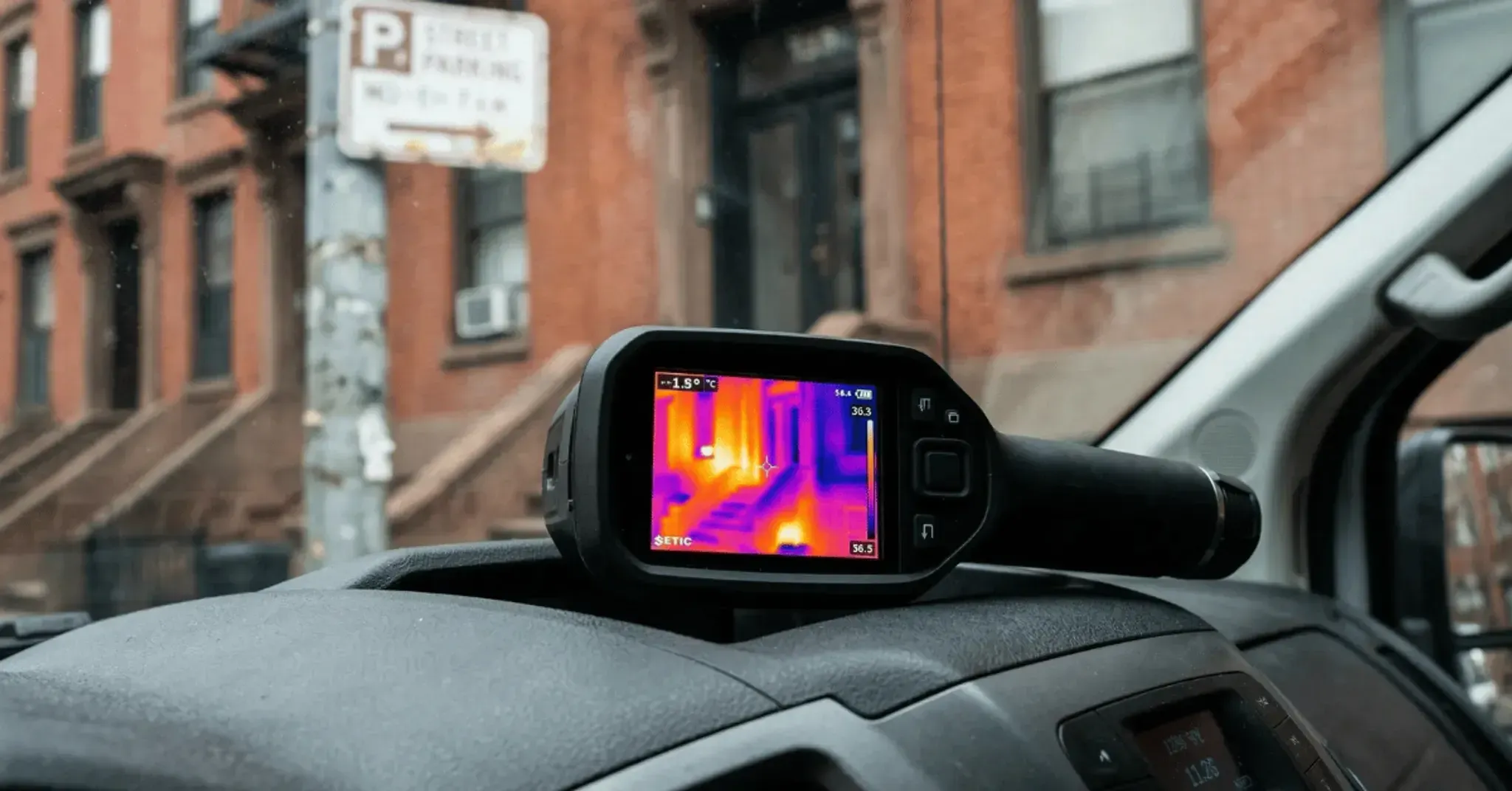
A thermal camera looks at heat patterns on the walls, floors, and ceilings. Wet areas will show up as cold spots among the warmer, dry spots around them. The inspector uses this to find leaks, pipes that do not have enough wrap, and damp places that people cannot see just by looking.
In a building built after the year 2000 with normal drywall, you can often use a moisture meter by itself. Old NYC homes built before the war are not the same. The plaster over the wood can be as much as two inches thick. A pin meter cannot get to the wet part behind the wall. A pinless meter might give you a reading, but the thick plaster makes the signal weak.
The camera checks how warm or cool the wall is from two feet away, and it does not need to touch the wall. A cold line that shows up on plaster next to a window can mean there is moisture coming in from outside. A cold spot just above the baseboard on an outside wall shows the path that blocks water is not working.
Knowing what to ask about their thermal gear before you book can help you avoid extra trips and missed signs.
Infrared adds between $100 and $200 to a regular mold test invoice. For a pre-war apartment where walls cover up everything, it is the line item that changes things from just hoping to really seeing what is there.
How to Read the Invoice Before You Book
A clear NYC mold inspection invoice should list the things that are charged. If there is a set price for everything, it should at least explain what is in these bundles.
The base inspection fee pays for the site visit, someone looking at the area, moisture readings, and the written report. Air sampling costs money for each cassette. This price is usually $75 to $150 each, and you need at least two cassettes—one indoor and one outdoor to be the control. Lab fees are what the trusted lab asks for when they read the samples. Fees for infrared, parking, and entry should all be listed as their own items. They should not be mixed in with other charges.
A $300 quote does not use infrared and just takes one air sample. This is not the same as a $550 quote that comes with [thermal] scanning, three samples, and a full lab report. Before you go ahead and book just because of the price, check what each quote covers for you.
Why is mold testing more expensive in Manhattan than in Brooklyn or Queens?
Manhattan has higher parking fees. There are also tougher rules for getting into buildings there. A lot of the old buildings need infrared scans. Brooklyn and Queens have more ways to get into a place on the first floor. The cost to park is lower in those spots. Many of the homes were built after the war and have drywall. Lab work will cost the same in each borough. The change in price comes from how things are handled.
Should I skip infrared to save money?
If your building has standard drywall and you can already see where the water is coming from, then this way works. In an old building in NYC with thick plaster walls, not using infrared only lets the person checking for water use a moisture meter on the surface. Leaks that you can't see behind deep plaster are often the main reason mold keeps coming back in older apartments. Spending $100 to $200 on infrared usually helps find problems that could later cost thousands to fix.
Is the outdoor control sample really needed?
Yes. Without it, your indoor spore count is just a number with no background. The outdoor sample gives the starting point. If your indoor count is three times higher than the outdoor level for the same kind, that points to a problem in the building and not just normal city air. Without this, neither you nor a judge can tell what is happening.
The Price Reflects the City
Mold testing in NYC can cost more than it does in other places. This happens because many buildings in NYC are not easy to reach, parking is tough, and it takes more work to check the buildings. Every cost on the invoice is for a real part of the job. Knowing what each charge is for can help you compare prices. It lets you see which offers are lower because they might leave out some parts of the work.
Fast Mold Testing NYC gives you full inspections. They use infrared. You get results from an accredited lab. They give clear invoices. They work in all five boroughs.
Frequently Asked Questions
- What extra fees should NYC tenants and landlords expect on a mold inspection invoice?
- NYC mold inspection invoices commonly include fees beyond the base inspection rate for parking in congested neighborhoods, elevator wait time in high-rise buildings, infrared camera use as a separate line item, rush lab processing, and travel surcharges for outer borough or remote locations. Fast Mold Testing provides transparent pricing starting at our transparent rate with clearly itemized fees so there are no surprises on the final invoice.
- Why does a NYC mold inspection cost more than in other cities?
- NYC mold inspections cost more than in other cities due to higher inspector overhead including parking and transit costs, the complexity of accessing multi-unit buildings with elevator wait times and building management coordination, higher laboratory fees at NYC-region accredited labs, and the state licensing requirements that limit who can legally perform certified mold assessments in New York.
- Is an infrared camera fee worth paying on a NYC mold inspection invoice?
- Yes. In NYC's dense building stock with thick plaster walls and complex HVAC systems, thermal imaging identifies moisture pockets behind walls that moisture meters alone cannot always locate. The infrared scan directs sampling to the right locations, which makes the lab results more meaningful. Fast Mold Testing includes thermal imaging as part of its standard inspection protocol rather than billing it as a premium add-on.
- How much should a complete mold inspection in New York City realistically cost with all fees included?
- A complete NYC mold inspection with moisture mapping, infrared imaging, outdoor control air sampling, and AIHA-accredited lab analysis typically totals between $500 and $1,200 once all fees are included. Fast Mold Testing starts at our transparent rate and provides a transparent quote before the visit so you know exactly what the final cost will be before scheduling.