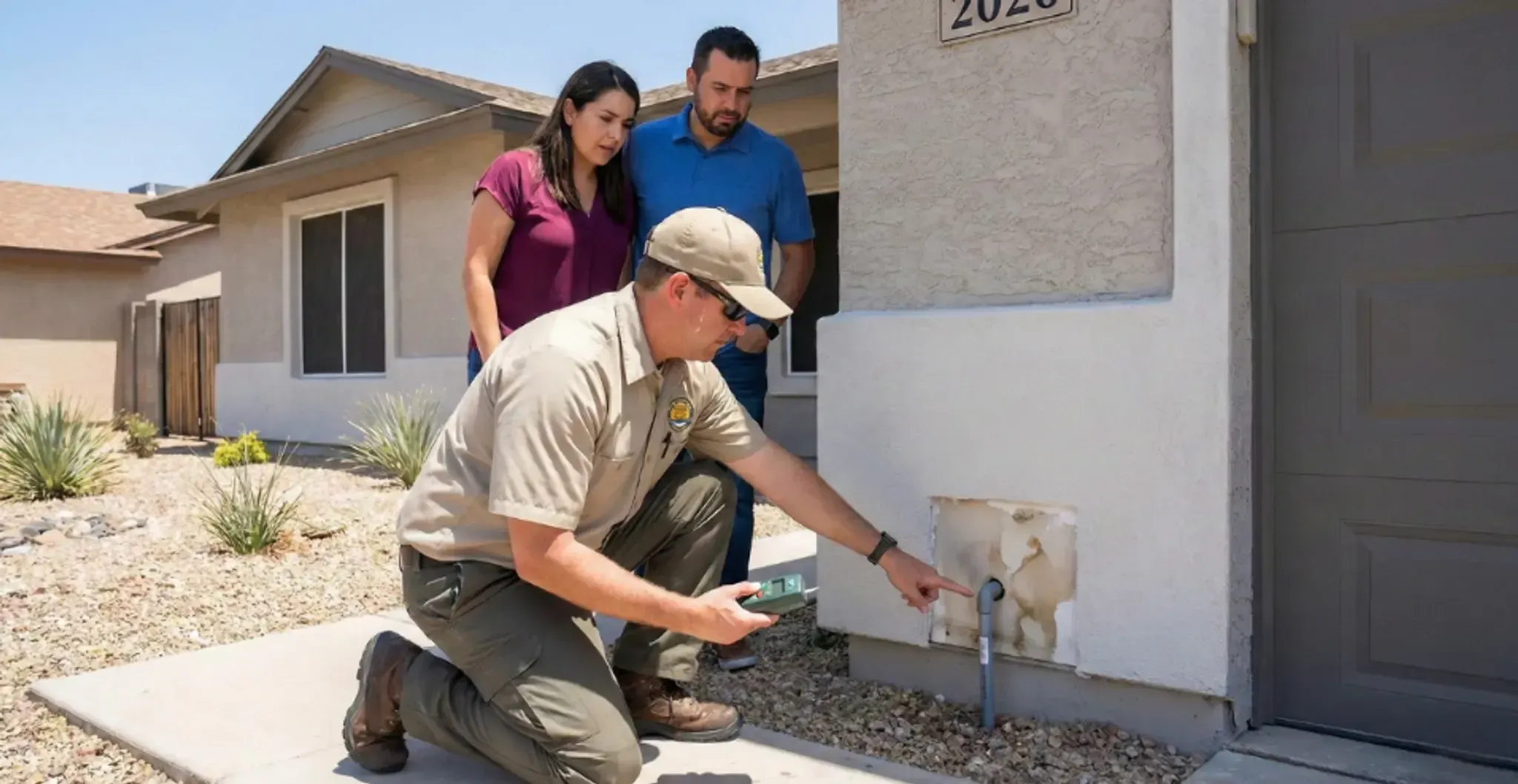

The Phoenix real estate market is not the same in early 2026 as it was in the early 2020s. Back then, people saw a lot of bidding wars and buyers would skip inspections. Now, the market is more balanced. Buyers have the upper hand. This is good news if you are hoping to buy a home. But, there are many homes in the housing stock that were quickly flipped during the busy years. A lot of these homes may look nice on the outside, with new paint and new floors, but they could have big problems hidden underneath.
For Phoenix buyers in 2026, good mold inspection and checking the inside parts of the house help keep you safe.
The Phoenix Market in 2026
Early 2026 brings a stable Phoenix market. Areas doing well are seeing price appreciation between 3 and 7 percent, which is much lower than the sharp rises before. There is more inventory, so people do not have to compete as much to buy a home. Now, price appreciation at 3 to 7 percent is common, and bidding wars do not happen often anymore.
Buyers have more power now. Sellers are offering things like help with the interest rate or paying some closing costs. This is happening in over half of all sales. Buyers can also ask for detailed checks on the home before the sale goes through.
But there are still homes in the housing market that were sold during the boom. At that time, many homes got flipped fast to make money. Work was often rushed. People covered up big problems instead of fixing them the right way.
The Danger of Quick Flips
Phoenix flips often focus on nice-looking changes that can hide big problems. Investors put in quartz counters, vinyl plank floors, and stainless appliances to make the home look good. But they do not fix or may try to cover up more costly issues, like cracked foundations, roof leaks, bad electrical panels, and problems with pipes.
Quick flips prioritize looks over substance, and flippers will paint over water stains, but not stop the leaks. They put up drywall to cover up places where bugs ate the wood, but they do not actually get rid of the bugs. Sometimes, they put in new pipes you can see, but leave old, broken lines in the walls.
For people in Phoenix who want to buy a house, skipping the inspection is a huge risk. A home that looks good on the outside can hide big problems inside. These issues can cost you a lot of money to fix, even up to tens of thousands of dollars.
Termite Concealment
Subterranean termites are found all over Phoenix. The hot, dry climate and water from yard irrigation make it a good spot for them. A trick some people use is to cover up termite damage with new drywall. Others paint over the mud tubes instead of getting proper treatment for the problem.
If you do not get a Wood-Destroying Insect Inspection Report, you might buy a house with weak or damaged wood in the frame. A lot of the damage is hard to see. You often will not find out about it until you take off walls or floors. At that point, you have to deal with the problem, and the person who sold you the home has already moved on.
Phoenix termite inspections need to cover crawlspaces, attics, and garages. This is where you will often find the most activity. Inspectors look for mud tubes on the foundations, wood that is damaged, and wings left near windows. A good treatment will use soil trenching all around the foundation and use liquid termiticide. It is not enough to just fix the surface.
The Polybutylene Piping Crisis
The biggest risk to homes in Phoenix is from homes built between 1978 and 1995, when polybutylene pipes were used. These gray plastic pipes were said to be a new and better choice at that time, but they have a serious problem.
Polybutylene reacts with chlorine that is added to Phoenix water. This means chlorine can attack the plastic piping and the parts that hold them together. Because of this, the pipes start to break down on the inside.
A pipe can look good on the outside, but be very thin and broken on the inside. A problem will happen one day, not if. For people who want to buy a home in 2026, having a home with polybutylene pipes still in place can be a big problem.
Insurance and Money Problems with Poly-B
Many insurance companies now ask you about plumbing in the home. If the house has polybutylene pipes, it may not get insurance. Some insurance policies will not cover water damage if a pipe fails. If the pipe bursts and floods the house, you have to pay for all repairs.
The only fix is to do a full repipe. This means you have to stop using the old polybutylene pipes. New PEX or copper pipes will be put in the whole house. In Phoenix in 2026, this usually costs between $4,000 and more than $15,000. The cost depends on the size. Workers will need to open up the walls and ceilings to get to the pipes. When the new lines are in, they patch and paint everything.
Smart buyers want credit for the full repipe cost when there is polybutylene in the home. A home with poly-B will be worth less. It will also be on the market for a longer time. This is because buyers know about the risk.
How to Spot Polybutylene
Homes in Phoenix that were built from 1978 to 1995 should have a poly-B check during the inspection. Let your inspectors know they need to say what kind of pipe is in the home, not just look for leaks.
Look to see if there are gray plastic pipes in crawlspaces, attics, or the area near the water heater. Check if you can spot PB2110 written on them. If the supply lines are white, blue, or gray, this often means there is polybutylene. If there are pipes made of copper or PEX, it means the home was repiped.
Never Waive Inspections
Not doing inspections on Phoenix homes is too risky. There are often problems that people do not see because of quick flips. A balanced market in 2026 means you do not have to skip inspections to get the home you want.
A full inspection should cover the basics of a home. This includes the structure, electrical system, plumbing, HVAC, and the roof. You should also add a termite inspection from a licensed pest company. Look at what kind of pipes are in homes built from 1978 to 1995. If the home is old, you may want to have the sewer looked at too.
These cost between $500 and $1,000 in total. This is not much to pay if you want to avoid buying a home that might have $15,000 in unknown plumbing repairs, $10,000 in damage from termites, or mold growth from leaks you do not see.
Mold Risks in Flipped Homes
House flippers may hide water damage. They do not always fix it the right way. A roof leak may get new shingles. But the wood under the shingles, if it is damaged by water, will still be there. A leak in the pipes may get new pipes. But if the wall has mold because of the leak, the drywall will still be there.
Phoenix has dry air, so mold is not as common here as it is in damp places. But mold can still show up where water gets in. Bathrooms that do not have good air flow can get mold. Leaks from an evaporative cooler can also make mold grow. Problems with pipes that leak will lead to mold as well. All these things can lead to mold in your home.
Fresh paint and new floors can hide mold that is behind the walls. A musty smell when you look at a home is a bad sign. Water stains on the ceiling show there have been leaks before. This is true even if someone painted over them.
Pro mold inspection uses moisture meters. Heat cameras can find hidden wet spots. Air tests help spot bad stuff in the air, even if you can't see any mold. You should do this before you buy the house. This is important with flipped homes. A fresh look could hide some problems.
Protect Your Purchase
Phoenix in 2026 gives buyers better market conditions than in peak years. But, there are still some risks with the housing stock. Fast home flips and old parts can cause problems. Never skip inspections. Always look for polybutylene pipes in homes built from 1978 to 1995. Get a termite inspection. Also, look for any signs of hidden water damage.
These simple steps help you avoid spending money on big problems that might look like nice homes when you first move in. Book your pre-purchase check with Fast Mold Testing to get a full look at the place. This includes checking for moisture and testing the air quality.
Frequently Asked Questions
- Why are flipped homes in Phoenix particularly prone to hidden mold problems in 2026?
- Flipped homes in Phoenix often undergo rapid cosmetic renovations without addressing underlying moisture damage from prior roof leaks, plumbing failures, or monsoon-related water intrusion. Investors may apply new drywall, paint, and flooring over moisture-damaged materials to pass visual inspection. Phoenix's desert climate means mold grows slowly enough that it can be concealed for months before becoming obvious.
- What should Phoenix home buyers look for to detect mold concealment in a flipped property?
- Phoenix buyers should look for new drywall or flooring patches that do not match surrounding materials, fresh paint on only portions of walls rather than full rooms, new caulk or grout applied over stained grout, and recent permits for plumbing repairs that may indicate prior water damage. A professional mold inspection with moisture mapping from Fast Mold Testing can find moisture behind new surfaces that visual inspection misses.
- How much does a mold inspection cost in Phoenix for a flipped home purchase?
- Mold inspections for flipped home purchases in Phoenix typically cost between $500 and $800 (more for extensive inspections). Fast Mold Testing starts at our transparent rate with results in 1 to 2 business days. The pre-purchase inspection is a fraction of the cost of post-purchase remediation, which can run $5,000 to $30,000 if hidden mold was concealed under new finishes.
- What legal recourse does a Phoenix buyer have if they discover mold was concealed in a flipped home?
- Phoenix buyers who discover concealed mold after purchase may have claims against the seller for fraudulent concealment or failure to disclose, and against the listing agent for misrepresentation. A professional mold inspection report from Fast Mold Testing dated before or shortly after closing establishes the condition at the time of sale and is the foundational document for any legal action.