
San Diego may look dry if you check the weather data. But in real life, the houses here tell a different story. The air from the ocean, cloudy weather in May and June, hot days at the end of summer, and secret leaks inside walls or big one-level homes all give mold a chance to grow.
If you think there might be mold, you can look for it with easy tools. You can also get someone to check for mold and write a report for you.
This guide tells you what you can do by yourself in a house in San Diego. It explains why store-bought mold kits do not work well. It also helps you know when you need a pro to come look at the problem and what you will have to pay for testing.
Key Takeaways for San Diego Homeowners
-
Mold can be a big problem in San Diego, especially if you live near the water or in an older house made with stucco or built right on the ground.
-
You can check for obvious water damage or small, easy problems yourself.
-
DIY mold test kits are not always helpful because they don't check outside air and how air is moving.
-
A professional should always start by finding where water is and understanding the building before doing any lab samples.
-
Do it yourself if it is just a small and one-time problem. Call a pro if the problem is hidden, keeps coming back, shows up in many spots, or if insurance, home sale, or rental disagreements are involved.
Why Mold Testing Matters in San Diego’s Climate
San Diego has a dry, Mediterranean climate. But sometimes the air from the ocean brings moisture at night. Cool, wet air settles in areas by the coast like La Jolla, Pacific Beach, and Coronado. This often leads to fog and high humidity. A thin layer of water can show up on stucco, windows, and walls in the shade, even if it does not rain.
Places like El Cajon, Escondido, and Poway, which are away from the coast, get hot and dry during the day. At night, it gets cooler. People use air conditioning a lot because of the heat. Sometimes, there are muggy days, and that can make water show up on cooled walls, ducts, and air vents.
Many homes use stucco on top of wood framing. They have slab-on-grade foundations with copper pipes, or older raised foundations with vented crawl spaces. When these systems get stress from ocean air, changes in temperature, or small leaks, water can stay hidden behind walls and finishes for a long time.
The result is clear. You can be in a “dry” outdoor climate, but still have real mold risks inside your home.
What DIY Mold Checks Can Actually Do in a San Diego Home
DIY checks help you find out one thing. Do you see or smell any signs of moisture or mold?
A good DIY walkthrough includes:
-
Scan the ceilings and upper walls for new stains. You should look under rooflines and around skylights.
-
Check baseboards and door frames. Be aware of any swelling, gaps, or places that feel soft.
-
Look at the flooring. Signs like cupping, warping, or warm spots may mean a leak below the floor.
-
Check under sinks, behind washing machines, and around water heaters. Watch for drips or rust.
-
Look around large windows and sliding doors that can get rain blowing in from the wind.
Use simple tools instead of kits:
-
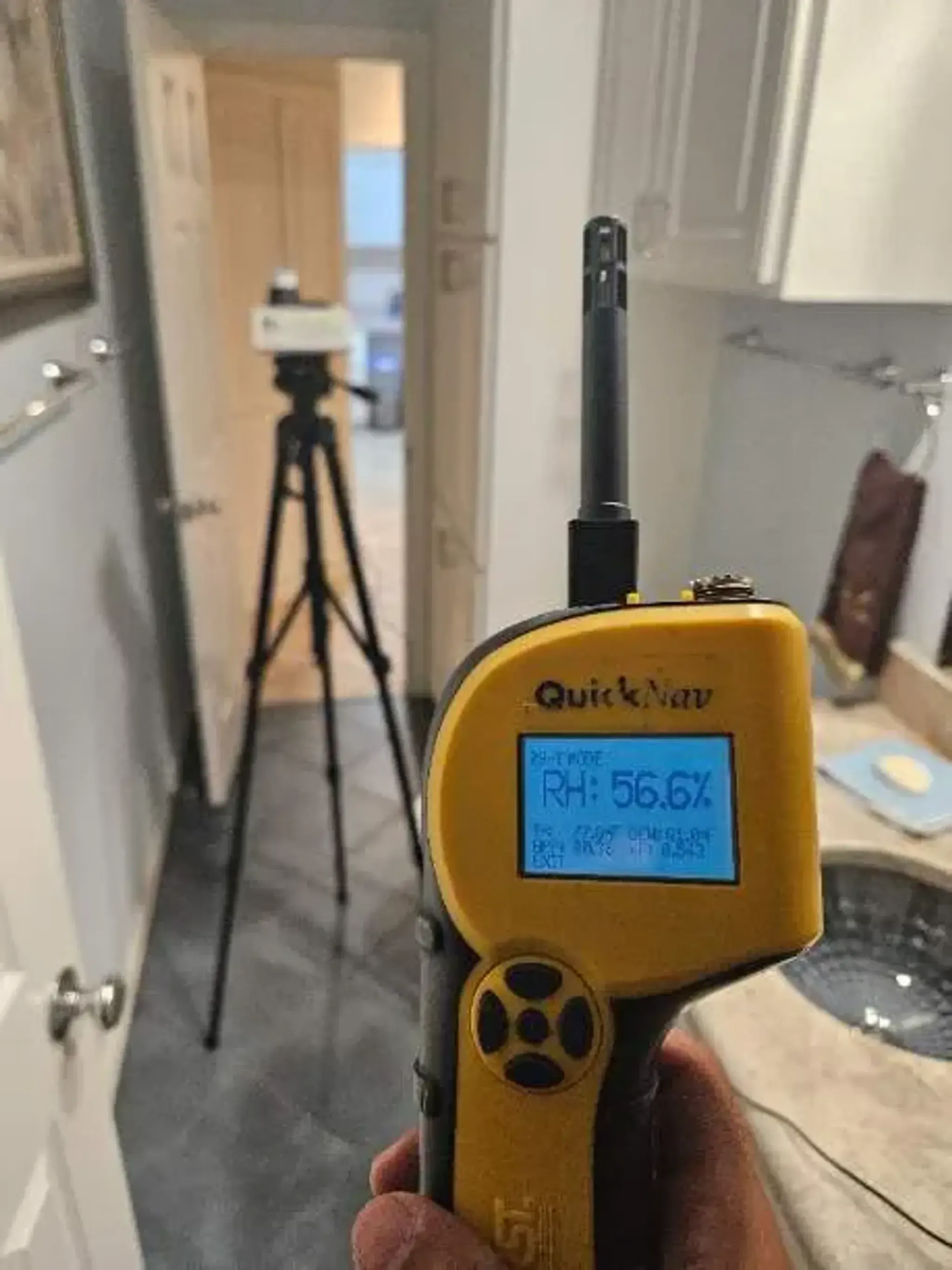
Hygrometer helps you check the humidity inside. Try to keep most rooms below 60% humidity.
-
Basic moisture meter lets you see if walls and trim feel damp, especially near spots you worry about.
-
Flashlight and phone camera help you look in small areas and take pictures of what you find.
Your nose helps you notice things during DIY testing. A musty or earthy smell that stays, especially when the house is closed, can be a big sign that there is a problem. This is true even if you cannot see where it is coming from.
DIY checks are good when the issue is small, easy to see, and simple to fix. For example, if you see a small amount of mold on shower caulk in a bathroom with a weak fan, you can usually clean it yourself after you fix the moisture problem.
Why San Diego’s Construction Makes DIY Limited
There are some common ways homes are built that make it tough for people who live there to know where water is getting in.
-
Stucco over wood framing - Stucco is the kind of wall covering that takes in water. It needs a layer behind it to let water out. If the building paper or metal flashing behind the stucco breaks, water can get to the wood sheathing and framing. If the weep screeds are covered or the ground next to the house is high, water gets stuck at the bottom of your walls.
-
Slab‑on‑grade with copper plumbing - Slow, small leaks under the floor push water up through the concrete. You might feel warm spots, see wood floors that bend, or smell musty baseboards. Wet spots inside the wall can still be hidden.
-
Older raised foundations with crawlspaces - Open crawlspaces can take in cool, wet air from the ocean. Wet spots form on wood floor joists and under your floor, and mold grows where it is hard to see inside.
DIY checks may help you see that there is a problem, but they do not show you all the moisture hiding in your home. This is when it helps to have the right tools and someone with good experience on the job.
Why DIY Mold Test Kits Are a Bad Idea (Especially Here)
Most kits you buy use open petri dishes that you put out for about an hour. Spores from the air land on the dish and start to grow into groups.
These kits have major problems:
-
They use gravity. Heavy outdoor spores drop to the ground easily. Smaller spores, the ones that can be bad for health, stay up in the air and often do not come down.
-
The test does not look at air volume. You will not get the number of spores in each cubic meter, which most people use to judge air quality.
-
These tests almost never have outdoor test samples. You will not know if the levels inside are out of the ordinary for where you live.
-
They catch only live spores that grow well on that food. Dead pieces and slow-growing spores can be missed.
Government and industrial hygiene sources warn people again and again that DIY plates do not give data you can use. Most of the time, these tests only make people feel worried. People still end up cleaning what they think is a small issue, or they decide to call a pro for help.
If you want advice that you can trust instead of just another kit sales pitch, look at U.S. Environmental Protection Agency’s mold resources, the California Department of Public Health’s mold pages, and San Diego County’s mold and moisture tips for housing. They show you how to stop moisture problems and let you know when to get help from a pro.
What Professional Mold Testing Looks Like in San Diego
A good San Diego mold inspection is more than just finding mold. It is a check for water and how your building works, with some testing in a lab too.
A neutral inspector will typically:
-
Get a full story about any leaks, bad smells, signs of problems, and all past fixes.
-
Walk around the outside to look at stucco, weep screeds, decks, windows, roofs, and how water moves away.
-
Use thermal imaging to spot cold areas. These cold spots can show hidden water.
-
Use moisture meters that do not damage things, and also use pin-type ones, to find where things feel wet.
Sampling is then used to help find answers to certain questions, such as:
-
Is the dark stain mold, and is it still growing?
-
Are the mold levels in the air inside much higher or different than the ones outside?
-
Did cleaning and fixing bring the house back to normal levels?
Air samples are taken using pumps that are set just right and spore traps. At least one outdoor sample is used for comparison. Surface samples, like tape lifts or swabs, can tell us what kind of mold is on an area and if it is growing.
The final report should turn lab data into simple language. It needs to have photos, moisture readings, and a plan that shows the steps for cleanup. A company that just does inspections, like FastMoldTesting.com - San Diego, gives you a clear opinion and a straightforward plan. They do not try to get you to buy their cleanup services.
DIY vs. Pro: How to Decide in a San Diego House
Use DIY checks when:
-
Mold is usually on a small area, less than 10 square feet.
-
You know where the water came from and it has been fixed.
-
The mold is found on surfaces that you can clean easily. These may be tile, metal, or sealed surfaces.
-
You do not see any leaks or problems with the floor or stucco.
-
No one living in the home is in poor health.
In these cases, you just need to clean well and dry everything.
Call a professional inspector when:
-
Mold or stains show up in more than one room, or they return after you clean.
-
There have been leaks from the roof, deck, stucco, slab, or plumbing before.
-
The floors feel soft, warm, or warped near the walls, or the baseboards pull away for no reason.
-
You notice a mold smell but you cannot see where it is coming from.
-
You are dealing with a home sale, insurance claim, or disagreement with a landlord and you need records that are fair to all parties.
In these cases, a licensed inspector will show you where the problem is. The inspector will give you steps to fix it that you can share with contractors, landlords, or buyers.
How Much Does Mold Testing and Inspection Cost in San Diego
Actual costs change based on the size of the home and how complex it is. Still, if you look at research and local price ranges, you can see some patterns.
-
Basic mold inspection for a smaller home or condo will often start in the low to mid hundreds of dollars. This is for a check by looking around, moisture mapping, and a short report.
-
Inspection plus several air and surface samples will usually cost more. This is common in bigger homes or where there are many spots to check.
-
Hard, legal, or multi-visit cases can go up to about a thousand dollars or more. This happens when you need detailed reports and follow-up tests.
Quick Mold Check Routine for San Diego Homes
You can spot problems early if you follow a regular routine.
-
Once a month, walk through each room. Look for new stains on the ceiling or walls.
-
Look in bathrooms for dark caulk, paint that is peeling, or mold on the ceiling.
-
Walk around the outside to see if there are any cracks, stains, or covered weep screeds in the stucco.
-
Look under all sinks, around toilets, washing machines, and water heaters to see if it is wet.
-
Open the closet that holds the furnace or air-handler. Look for rust, water that is standing, or wet insulation that smells bad.
-
Use a hygrometer during mornings with marine layer or on nights that feel damp. The goal is to keep the air inside under 60% humidity.
After any big rain or wind, go back and look around windows, sliding doors, and ceilings. If you notice new stains or that musty smell, write it down. Then, you can pick if you want to clean it on your own or call someone for help.
FAQs About Mold Testing and DIY Checks in San Diego
Do I need lab tests to find out if my home in San Diego has mold?
You do not always need lab tests for mold. If you see mold or notice a musty smell and know there is moisture, it is a sign there may be a mold problem. Lab tests are helpful if mold is hard to see, if you want proof of the problem, or if you need to make sure the cleanup worked.
Are DIY mold kits ever worth it?
DIY mold kits are not the best choice for most people. These kits do not help much in making important choices. They also do not show how many mold spores are in a certain space. You will not see outdoor and indoor levels compared. A good walkthrough with basic tools will give you more answers. Sometimes you may need an expert to check things for you.
Can my landlord just paint over mold?
No. In California, visible mold is seen as a problem. Landlords have to fix leaks and wet spots. They cannot just paint over the mold. If you see mold or wet places, you should tell your landlord in writing. If they do not fix it, you can reach out to San Diego code enforcement.
If I am already getting a home inspection, do I still need a mold inspection?
Most of the time, yes. If the house has any leaks in the past, smells musty, or you see any odd stains, you should think about a mold check. A regular home inspection will not cover everything. A mold inspector looks for water problems, checks hidden places, and tests the air inside. They use tools just for this job. They also take samples to find mold.
Final Word: Use DIY Wisely, Call a Pro When It Counts
San Diego often has a mix of fog, heat, and homes that are easy for mold to grow in. Mold can show up even if it seems dry outside. It helps to check your place on your own, use a hygrometer, and take care of simple fixes around the house. This can make a big difference.
But DIY mold test kits do not really help you make better choices. For small and clear problems, just clean up with care. For trouble you do not see, for things that keep coming back, or for big risks, you should go to an independent professional. They give you clear facts and a plan.
If you want an inspection only with no conflict, FastMoldTesting.com - San Diego can help you see what is really happening in your house and what you should do next.
Frequently Asked Questions
- What can a DIY mold check actually accomplish for San Diego homeowners?
- A DIY mold check in San Diego can help you locate visible mold on accessible surfaces, identify musty odor sources, and spot water stains or discoloration that suggest moisture problems. It is a useful first step for deciding whether to call a professional. What it cannot do is measure moisture inside walls, identify mold species, quantify airborne spore concentrations, or produce documentation valid for insurance claims or legal disputes.
- When is a professional mold inspection worth the cost for San Diego homeowners?
- A professional mold inspection in San Diego is worth the cost when mold keeps returning after cleaning, when there is a persistent musty odor without visible mold, when someone in the home has unexplained respiratory symptoms, when buying or selling a home, or when you need documentation for an insurance claim or tenant dispute. In all of these situations, a professional inspection from Fast Mold Testing at a transparent published rate provides findings that DIY checks cannot produce.
- How much does a professional mold inspection cost in San Diego compared to a DIY test kit?
- DIY mold test kits in San Diego cost $10 to $50 plus $30 to $75 in lab fees, but produce results with no moisture data, no outdoor baseline comparison, and no professional interpretation. A professional inspection from Fast Mold Testing comes at a transparent published rate and includes moisture mapping, outdoor-controlled air sampling, and a written report. For any purpose beyond satisfying personal curiosity, only the professional report provides actionable results.
- What mold risks in San Diego are DIY tests most likely to miss?
- DIY tests in San Diego most often miss mold growing inside wall cavities from coastal fog condensation on exterior surfaces, beneath bathroom tile from failed grout and waterproofing, in HVAC systems with condensate drainage issues, and in crawlspaces with soil moisture infiltration. Settle-plate tests placed on a kitchen counter cannot detect any of these sources, which require moisture meters and targeted air sampling positioned near the actual risk locations.