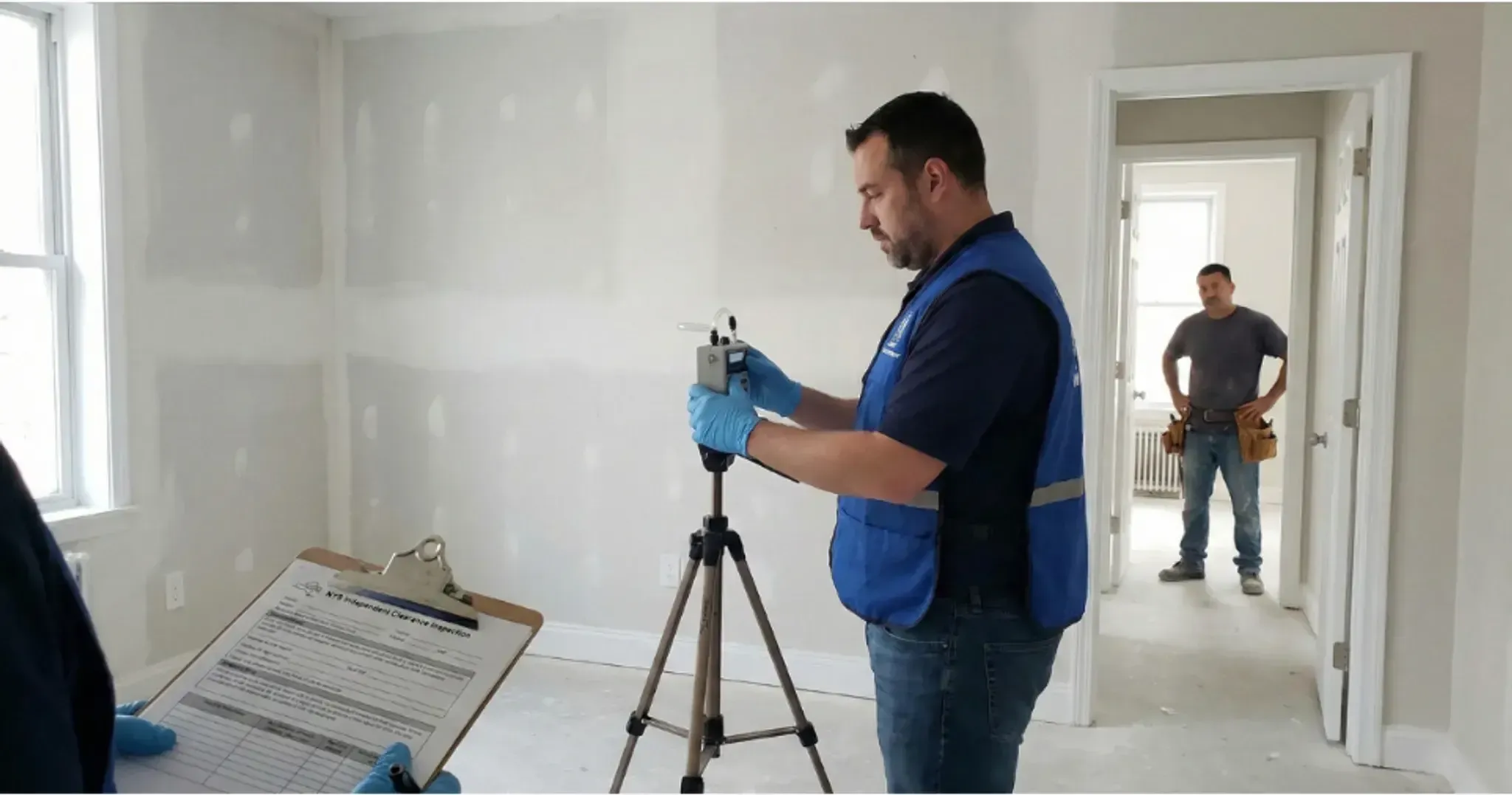

Many people who own homes in New York feel that mold removal is finished once the plastic sheets are taken down and fresh drywall is put up. The walls look clean. The person doing the work says everything is fine. The room looks like it did before. Most feel like this means it’s all done and pay the last part of the bill.
But New York State Labor Law Article 32 says contractors can not test their own results. This is not a choice. The law says they must not do it. If they test their own work, they can get fines. They can also lose their license.
The law is there because people testing their own homes had a clear conflict of interest. This made the work fast, with the job not finished. As a result, owners did not know about mold in their homes. The mold showed up again after a few months. The state found many cases like this. Then, it made some tough rules to fix the problem.
Why NY Made Contractor Self-Testing Illegal
Before 2015, the mold business in New York had no rules. A company could check your home, make the plan, fix the problem, and test the air all by itself. Money made them work fast. This hurt their job to fix things the right way.
The law created a strict wall between Mold Assessor and Mold Remediator. The same company can't do both on one project. This helps make sure the one who checks the work does not have a money reason to make the work bigger.
Licenses make sure people follow the rules. Mold Assessors have to get state licenses to take samples and write steps for the job. Cleanup workers need a different license. They also need insurance of at least $50,000 for the work. If these workers test their own cleanup, they will lose both licenses for good.
What Real Clearance Testing Involves
Post-Remediation Verification, also called PRV, is many steps. A person who has skills in the environment field does this work. This person works for you. They do not work for the company that does the clean-up. The person doing PRV does not get more money if you pass the check or if you do not pass. They get the same pay no matter what.
A visual check is done first. The person in charge looks to see if there is any dust, dirt, or mold. If they find something, the project fails right then. They do not take air samples after that. The area needs to be very clean before any testing starts. This is not a small thing. If something can be seen, the main job was not done well.
Smell is more important than many people think. A person will check for musty smells that can show active growth or signs left from old problems. These smells come from things that mold lets out. A place that has a musty smell cannot pass, even if air samples show good results at a different time.
A moisture check shows if the leak is fixed. There is no point in cleaning up if you do not fix the leak first. The mold will come back. The person checking needs to make sure the wall or ceiling is dry. They also need to see that you have solved what caused the leak. If the area still feels wet with meters, you can’t finish.
Air sampling is done after these three checks. The person testing takes air samples from inside the place and checks them with outdoor samples. Labs look at these in microscopes and count spore numbers and what type they are. The spore levels inside have to be the same as or lower than the ones outside. If the markers Stachybotrys or Chaetomium are there, it shows water damage was not handled right.
The Money Leverage Point
The passed report is like a proof that your space has been cleaned. It lets you get the last payment. It also keeps you safe from legal issues later. That is why the way you pay is so important.
Standard cleanup contracts keep back 10 to 20 percent of the total value until the final check is done. Some hold back all the last payment. This gives the money control that makes sure the work is good.
If you pay all the money before the independent test is done, you lose the power to make the contractor finish the work. If the test does not go well, it is hard to make the contractor come back. Now, this turns into a court fight instead of a job they must do by contract. The contractor has your money. They do not have any reason to come back. You have to fight for warranty work, but you have nothing to hold as pressure.
When you hold the last payment until an Independent Professional gives a passed report, the contractor stays very motivated. They want to get paid. If testing fails, they have a clear reason to come back and do the work again the right way. Most projects pass the first time when you use this payment system because contractors know they can’t get their last payment until the work meets what the industry asks for.
New York Labor Law supports this. The assessor must give a report that says pass or fail. A fail report will show that their work is not done. This means you can wait to pay if the contractor says the job is done but it is not finished.
What Happens When Testing Fails
Failed clearance does not mean there was bad intent. At times, the contamination turned out to be bigger than first expected. It can happen if they did not fix the moisture source. A leak in the containment can also cause spores to spread.
The contractor comes back and pays for the work to fix issues. Usually, they use the HEPA vacuum more, open up spots they might have missed before, and check the moisture levels again.
The Independent Professional tests again after things be cleaned up a second time. Most of the time, things pass on try two. If it does not, the failed test is used as a quality check.
Why You Can't Skip This Step
Some people who own homes skip getting things checked to save money. This causes problems that are much bigger than the small money they save at first.
Insurance companies need the PRV report to finish mold claims. If you do not have the report, your claim stays open. The insurer wants proof from someone not involved in the work that everything was done right and met all standards.
Real estate deals need this as well. In New York, you have to tell buyers if there was mold in the past when selling a the home. A passed PRV shows you took care of the cleanup in the right way. This helps protect you if the buyer has an issue after it closes. If you do not have it, buyers may ask you for a lower price to feel safer about the risk.
This law is here to keep people healthy. Mold can cause you to have breathing problems and allergies. Children and old people can be at more risk. You need a lab test to find out if your home is safe to live in.
Protect Your Rights
NY's separation rule is there to keep people safe because there have been many problems in the industry for years. The contractor wants to finish the job quickly because there is money on the line. The Independent Professional must, by law, make sure your home is safe.
Never let a contractor tell you that their own tests will do. Do not give the last payment until you have a new test done by someone else. Make sure you get Post-Remediation Verification from a licensed person who is on your side. Contact Fast Mold Testing for an independent test that will keep you safe and help protect your legal rights.
Frequently Asked Questions
- Why must clearance testing after mold removal in New York be done by an independent company?
- New York State law requires that the mold assessor and the remediation contractor be different licensed companies. This means the company that removed the mold cannot issue its own clearance certificate. The independence requirement exists specifically to prevent self-serving clearance declarations. Fast Mold Testing provides post-remediation clearance testing in New York as an independent assessor with no remediation services.
- What does a New York mold clearance test actually measure?
- A New York mold clearance test measures airborne spore concentrations inside the remediated area and compares them to an outdoor control sample taken simultaneously. If indoor spore counts are at or below outdoor levels and no water-damage indicator species are present, the area receives clearance. The clearance report from a licensed New York mold assessor is the document that closes out the remediation file.
- How much does independent mold clearance testing cost in New York?
- Independent mold clearance testing in New York typically costs between $500 and $800 (more for extensive inspections) depending on the number of rooms tested and samples taken. Fast Mold Testing starts at our transparent rate for clearance inspections with results in 1 to 2 business days. The clearance report is signed by a New York State licensed mold inspector and meets the documentation requirements for insurance claims and real estate transactions.
- When should New York homeowners schedule clearance testing after mold remediation?
- Schedule clearance testing in New York 24 to 72 hours after the remediation contractor has finished work and removed all containment barriers, but before any rebuild or new drywall installation begins. Testing with containment still in place produces artificially contained results, while testing after new walls are installed makes it impossible to verify what was done inside the wall cavity.