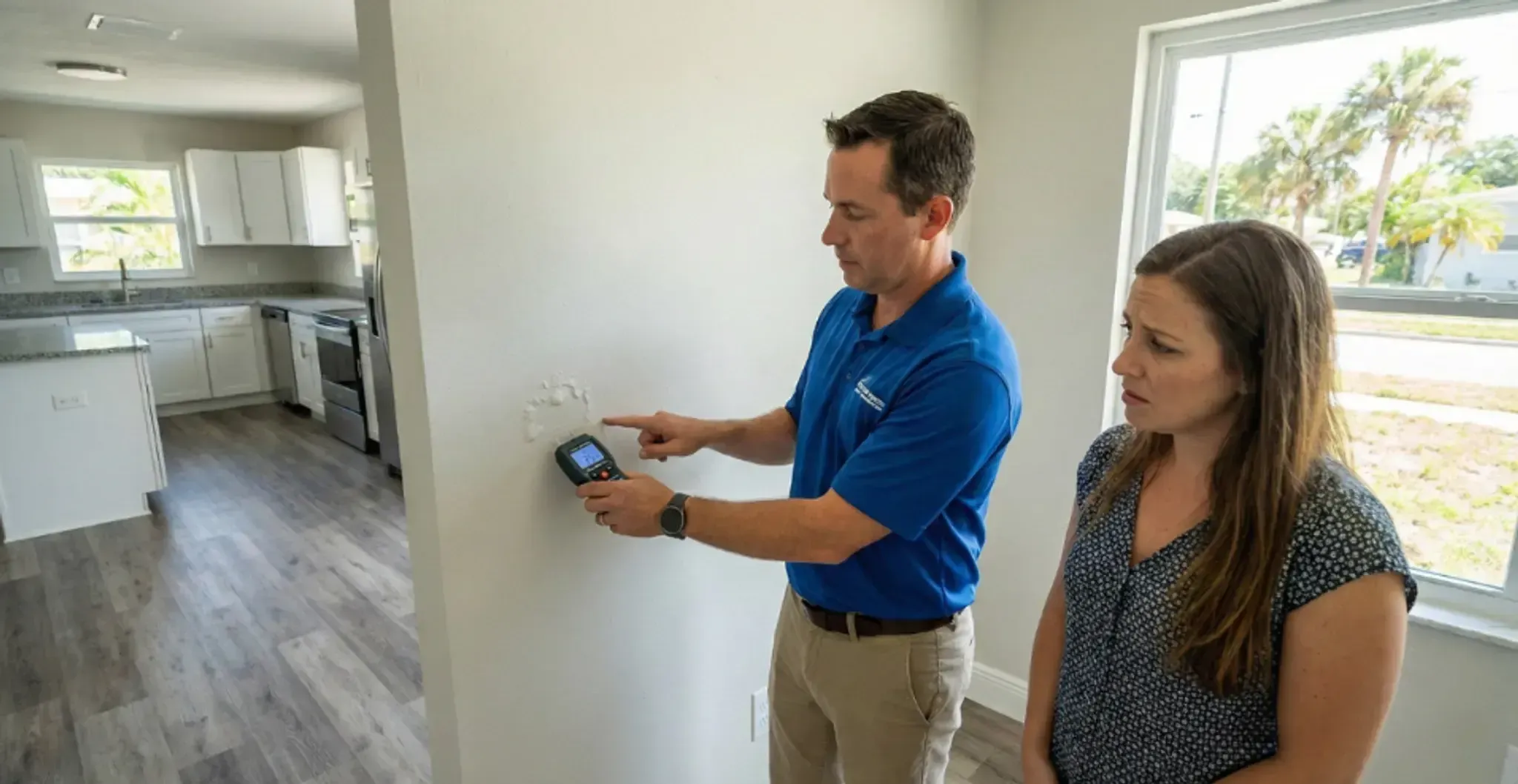

Tampa's real estate market is facing a problem. Every year, there are thousands of older houses that get flipped. Investors buy these homes at a low price because of water damage. They clean up the look of the homes fast and put them back up for sale to make money quickly. Because they feel pushed to sell the homes fast, many do not fix the real water problems. Instead, they cover these issues with quick fixes just to make the place look nice.
For people looking to buy a house in Tampa, learning how to see these tricks can help you save a lot of money on repairs later. It can even help save you tens of thousands now and in the future.
Why Cosmetic Cover-Ups Happen
When water damage hits a home in Tampa, the repair work must follow several steps. First, the damaged parts need to be torn out. Then, mold needs to be cleaned up following the right rules. After that, the house must be dried well. At last, everything is built back. The whole process takes time, and it can also cost a lot.
The money behind it is what makes people act the way they do. Finishes that look nice in photos make a home seem valuable, even if bigger problems aren't fixed. Paint does not cost much. Tearing out walls costs a lot. A lot of people who flip homes do what helps them earn more money, not what keeps buyers safe.
Five Flip Hiding Tricks
Paint Over Mold
The most common way people try to hide mold is by putting heavy stain-blocking primers right on top of active mold. Many use products like Kilz or Zinsser. These products make a short-term block that covers up stains and smells. But, they do not get rid of the mold. The contamination is still there.
The main sign is bubbling paint. When water gets stuck under new paint, it can push the paint off the wall. Also, look for paint drips on hardware or hinges. This can mean the job was rushed to cover up problems.
Floating Floor Over Rot
Water damage can ruin plywood subfloors. This often leads to the wood rotting. The right way to fix this is to take out the damaged subfloor. Some people try to save time and money by using a hard, floating floor like Luxury Vinyl Plank. They put it right over the damaged base instead of fixing it first.
Modern LVP is strong. It can cover gaps and soft places in the floor. This can hide that spongy feel for a short time.
Step firmly in room corners and near outside doors when you show the home. If the floor feels soft or goes down under your foot, that means the subfloor is not as strong as it should be. If baseboards do not sit flat against the wall, this can also show there is a warped subfloor below.
Texture Spray on Ceilings
Roof leaks can show up as yellow or brown marks on your ceiling. Instead of taking out drywall and repairing leaks, many flippers cover the stains using texture sprays.
Look for places where the feel of the ceiling does not match. New patches of popcorn ceiling on an old ceiling, especially close to outside walls or under bathrooms, may be a sign of trouble. A different shine or shade of white can show a new spot that was fixed.
Ozone Treatment
Bad smells can make buyers feel worried. A lot of house flippers use industrial ozone generators to deal with musty mold smells. Ozone works to cut these smells for a short time, but it does not get rid of what is causing them.
A strong smell like bleach or something electric when you walk into the property is a big warning sign. This shows there has been some kind of machine used to cover up bad odors. A lot of air fresheners are often used with it to hide any mold smell that can come back.
Hiding Foundation Problems
Settlement cracks and problems with the foundation can be covered up by new siding or fresh landscaping.
Flippers put new siding or stucco over cracks in the foundation. Garden beds that be right next to the house can hide the line to the foundation. But these also make a slope that sends water into the structure.
Too much caulk at the spot where the wall meets the base can hide when things move. Look to see if the ground goes down toward the house. Fresh mulch can cover this and hold water near the base wall.
Why Bleach Doesn't Work
A lot of people make a big mistake during home flip fixes. They use bleach to clean up mold. Bleach doesn't work on porous materials such as drywall and wood.
Can't Penetrate
Bleach has a high surface tension. Because of this, the chlorine part cannot go into small holes in wood or gypsum. It stays on top of the surface.
Molds grow by making roots that go deep into the material so they can get food. Chlorine can't go through it, so the roots are not touched.
Water Feeds Roots
Household bleach has a lot of water in it. It is made up of 94 percent water and only 5 to 6 percent chlorine. When you use bleach, the chlorine goes away fast. But the water goes deep into the thing you are cleaning.
The water gets down to the deep roots, where chlorine did not go. The clean-up work gives mold the water it needs. This means it can come back fast, sometimes in just 1-2 business days, even if the top looks clean.
Color Trick
Bleaching only makes mold look like it is gone, but this is not true. Mold gets its black or green look from a part called melanin. Chlorine takes away the color, but the mold can still be there.
The mold turns white or clear and blends in with the surface. The organism is still alive, but you can not see it now. This makes people think the problem is gone, but it is not.
What Real Inspection Finds
Pro Tampa home inspection does more than just look at things. Inspectors have tools that help them find hidden moisture.
Moisture meters help you check how wet the air is inside wall spaces without letting you cut them open. If you get a reading from 16 to 20 percent or higher, mold can grow there.
Thermal cameras help you find cold spots, and this shows where water gets stuck. Water can be seen as different temperature shapes on infrared.
Air sampling can show if there is mold. Even if mold is growing inside a wall and you can't see it, it can still put spores into the air we breathe. A lab test can tell what kind of mold is in the air.
Tampa Climate Risks
Tampa has a humid and warm climate. This extra moisture in the air comes from the Gulf. Because of this, things used to build homes can stay wet for a longer time when water leaks in.
One-story block buildings are common in older areas of Tampa. Concrete block can soak up water. When water gets into the outside block, it can move sideways through the space in the wall. This can spread mold and water problems far from where the leak started.
Tropical storms and hurricanes can bring lots of water several times a year. A house flip that seems fine in March might have water damage from a storm in August. This damage may not have been fixed right.
Protect Your Purchase
Tampa's flip market can be risky for people. New paint or fresh finishes can cover old issues. If there is mold, paint does not get rid of it. A vinyl plank put on top of a bad subfloor will not solve the real problem. Ozone can cover up bad smells, but it does not last.
Never take looks as proof of quality. Always want a full check that covers moisture testing and air sampling. Watch for some clear warning signs. Bubbling paint. Soft floors. Texture mismatches. A smell like ozone. A slope going the wrong way.
Ask a lot of questions about what the renovation covers. If the seller says they fixed water damage, ask for papers that show they cleaned it up the right way, not just made it look better.
Book your Tampa pre-purchase inspection with Fast Mold Testing to get a full look at what is under new finishes. This checkup will help you see things you might not notice on your own.
Frequently Asked Questions
- How do Tampa home flippers conceal mold during renovations?
- Tampa flippers commonly conceal mold by applying new drywall directly over moisture-damaged framing without replacing it, painting over surface mold on concrete block with encapsulant primers, installing new flooring over water-stained subfloor, and replacing only the visible portion of mold-affected drywall while leaving colonized framing and insulation behind. These methods pass visual inspection but leave active mold inside the wall assembly.
- What are the red flags of mold concealment in a renovated Tampa home?
- Red flags for mold concealment in renovated Tampa homes include fresh drywall compound or paint in only part of a room, new baseboards installed over stained concrete block, a faint musty odor despite new finishes, mismatched flooring or subfloor materials in a bathroom or kitchen area, and recent permits for plumbing or HVAC repairs that were not disclosed in the seller's disclosure form.
- How much does a mold inspection cost for a renovated Tampa home before purchase?
- Pre-purchase mold inspections for renovated Tampa homes typically cost between $500 and $800 (more for extensive inspections). Fast Mold Testing starts at our transparent rate with results in 1 to 2 business days. The inspection uses moisture mapping to detect elevated readings behind new drywall and finishes where visual inspection reveals nothing, which is exactly where flip concealment is most likely to occur.
- What legal recourse do Tampa buyers have if they discover concealed mold after purchasing a flipped home?
- Tampa buyers who discover concealed mold after closing may have claims against the seller under Florida's non-disclosure laws, which require sellers to disclose known material defects. A professional mold inspection report from Fast Mold Testing showing elevated moisture behind new finishes, combined with the recent renovation timeline, creates the evidentiary basis for a legal claim against the seller or their real estate agent.