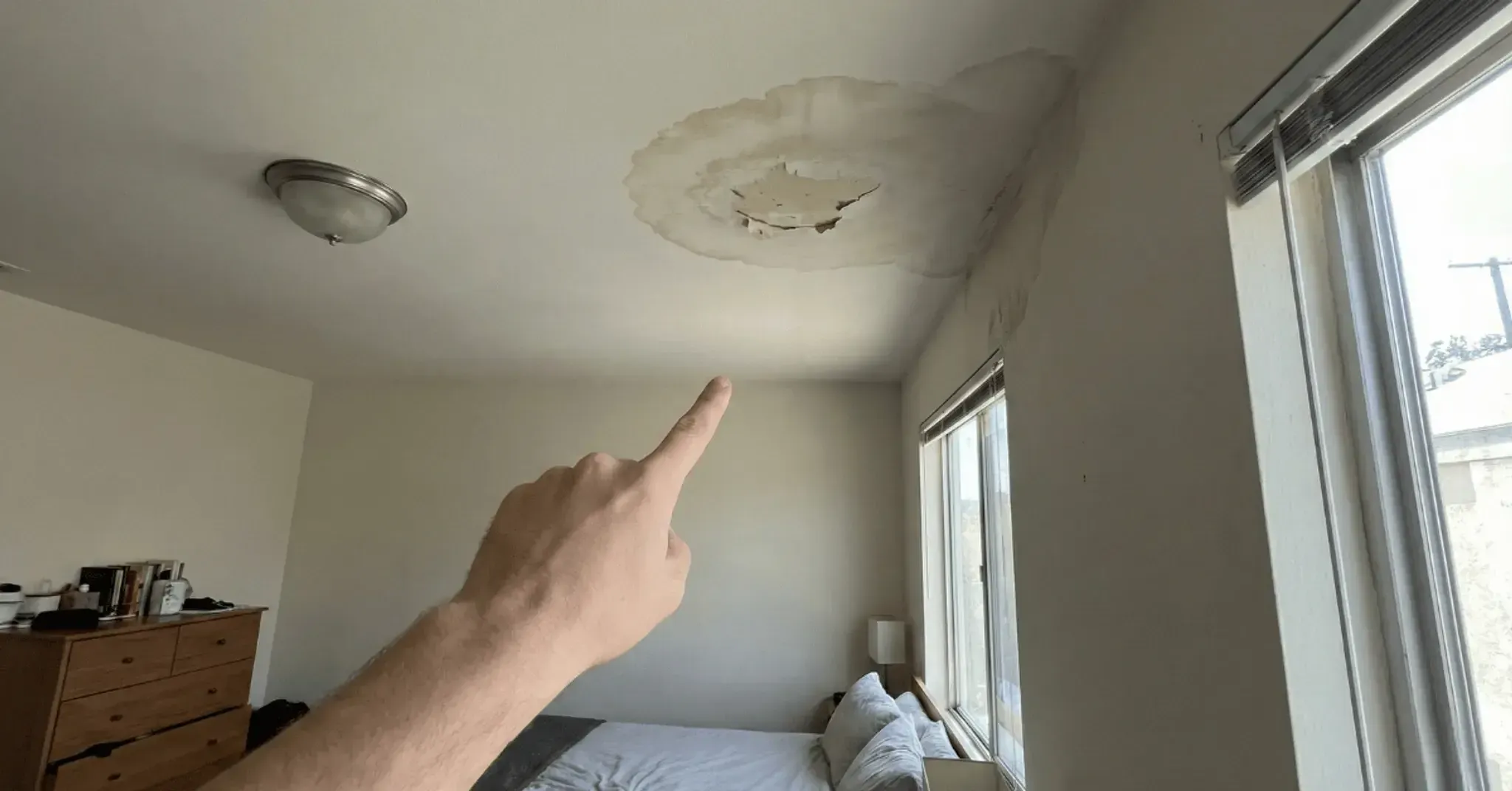

Your landlord spoke to you about your mold problem. They said that you shower for a long time and that you do not open the windows. They also said you cook a lot. They believe how you live is the reason for the mold. The landlord says you might need to pay for all the cleanup.
This line often comes up in Los Angeles apartments. In most cases, it is not right. There is a clear way to show this.
The main thing you need to know is how to spot if it is lifestyle condensation or a problem with the building. They show up in different spots. There are different signs on the walls and things. A trained person can find out which one it is in less than an hour.
Two Kinds of Moisture, One Key Tell
Mold has to have water to grow. What many landlords do not tell you is the water can come from two main places. Each one leaves its own signs.
Lifestyle condensation is caused by moisture from things you do, like showers, cooking, and laundry. This moisture settles as damp patches on cold tiles, grout, and window frames. If this is the only reason, mold will show up close to where steam forms. You may see it in the bathroom, near the shower, or on sink grout.
Building moisture starts inside the structure. A roof that leaks slowly, a pipe that rusts in the wall, a window seal that does not work, or weak insulation on an outside wall can all let water in. This water can move around. It goes through drywall and gets into wood framing. It can show up far away from the kitchen or bathroom.
A 2022 NIH study found that building problems are the main reason for indoor mold in homes. These problems made up 45% of all mold cases the study looked at. If you see mold in a bedroom closet, on a wall in the living room, or up in a ceiling corner that is not near the shower, it likely was not caused by your habits.
Where Mold Grows Tells You Why
Location is the best sign you can see. It is what a trained person checks first.
Mold on an outside wall that feels cold means there is a problem with the way your building keeps out weather. It could be that the wall does not have enough insulation. This is a building issue. OSHA says tightly sealed places built after the 1970s often trap moisture inside. This happens a lot in older LA apartments, like those in Koreatown, Silver Lake, and Hollywood.
Mold that shows up again a week after you clean it is a big sign. When you wipe a surface, you get rid of what you can see. But this does not dry the inside of the wall. The wet inside keeps helping the mold to grow.
If the steam from your shower is causing this, better airflow would help stop it. If it comes back again, the problem is for sure inside the building. A cleaned surface will not fix this issue.
Mold showing up in the same place in two units or more in a building is the biggest sign. The wall, the roof, or the pipes are the thing the problem comes from. It is not because each person who lives there does things on their own.
LA tenant inspections spot this same thing in many buildings in the city. A problem in one building, lots of renters end up blamed.
California Law Already Drew This Line
California law says landlords are not responsible for all mold. They have to take care of mold if it is not from tenant neglect or bad use.
California Health and Safety Code Section 17920.3 says that if you can see mold and it could hurt your health, the place is not up to standard. Senate Bill 655 has been active since 2016. It means that landlords have to fix mold problems, except if the tenants broke certain rules. The rules are about stopping air from moving through vents or not doing anything about a leak that they know about. California Civil Code Section 1941.1 says landlords must keep the weatherproofing and keep air moving in homes. This is something landlords have to do anyway, not as a special thing.
To put it simply, if there is mold in your bedroom or living room, the person who owns the place has to show that you are the reason it happened. The law does not think that you did something wrong just because you live there. A claim is not true just because the owner says so.
When you let your landlord know about mold in writing, California law gives them 30 days to fix it. If they do not fix the mold, you can report it to the Los Angeles Housing Department. They will look into it and can give code violations if the mold is not taken care of.
What a Professional Report Captures That You Cannot
The claim by your landlord that you caused the mold is something he just says. You need to answer with proof from a lab test.
A certified test uses a moisture meter. This tool checks for water inside walls, not just at the surface. If you see a reading over 20% in drywall or framing, it means real water is getting in from inside the building. Steam from a shower cannot cause that high of a reading. A high reading in your outside bedroom wall is hard for the owner to say is just a way you live.
Air sampling checks the number of spores in the air inside and outside. If the spores inside are a lot higher than outside, the EPA says there might be a leak or a problem in the walls of the building. Mold that grows on wood and drywall, but not on tile, also shows there is a problem.
That is not because of how people live in the home. The lab report has that data. It is not just what someone thinks.
HVAC systems inside old LA apartments can be a hidden problem. A small amount of water in one duct can make spores move through the whole unit. Air checks can find this spread. It gives you a result that the owner may not have had to talk about before.
Book LA inspection and get a lab-tested report in writing. You get solid proof. No need to have a talk or argument. The person who owns your place cannot just avoid it.
Common Questions About Mold Blame in LA Apartments
What if the mold was already there when I moved in?
Pre-existing mold is one of the easiest cases where the owner of the place is at fault. California law says the owner must tell you about any mold they know about before you sign a lease. If the mold was there when you moved in and the owner didn’t tell you, the Toxic Mold Act of 2001 makes it the owner's problem. A certified inspection done early when you start living there gives a clear, dated record. This shows the mold was there before you came in.
Can my lease hold me responsible for mold even if the building caused it?
No. Senate Bill 655 says that the person who owns the place must keep it safe. This rule stays, even if there is anything different in a lease. A rule in the lease that puts all mold costs on the person living in the unit is not allowed in California. If you find this rule in your lease, it does not change state housing law.
Can I use a mold report to break my lease in Los Angeles?
Yes, in some serious cases, this can happen. California knows about what is called "constructive eviction" if a landlord lets a dangerous thing stay in your place after you tell them about it. If there is mold and it makes your home not safe, you can give them written notice.
If he does not take action in 30 days, you may move out. You can stop paying rent. You will not have any fee for ending the lease early. A certified lab report is the best proof for your case.
Can my landlord deduct mold cleanup from my security deposit?
California law lets a landlord take out money from a deposit for mold. But, they have to show the tenant was at fault or did not take care of the place. A certified report that points to the building as the cause takes away this reason to hold the deposit.
How do I report mold to the City of Los Angeles?
You can make a complaint with the Los Angeles Housing Department by calling 1-866-557-7368. You can also use their online request portal. If your place is in LA County but not inside the city limits, call the Environmental Health Division at 1-888-700-9995.
The Report Changes the Conversation
Every day you don’t speak up, the mold gets worse and it’s harder to prove what happened. The longer you wait, the easier it is for the owner to say you knew about the problem and did not do anything.
A certified inspection shows the state of things at this exact time. That date is important. It changes a "he said, she said" fight into a clear record with facts about what someone saw and where it was found.
Book LA inspection with Fast Mold Testing. You will get a report from the lab in two days.
Related reading
Frequently Asked Questions
- How do I prove my Los Angeles landlord is wrong when they blame my lifestyle for mold?
- Get a professional mold inspection from Fast Mold Testing that includes moisture mapping and an outdoor control air sample. If the moisture source is traced to building systems, structural water intrusion, or a plumbing defect rather than tenant behavior, the report documents that directly. Elevated spore counts indoors relative to outdoors also show the problem is building-based, not lifestyle-based.
- What evidence does an LA landlord typically use to blame tenants for mold, and how do I counter it?
- LA landlords most commonly blame tenants for mold by citing insufficient ventilation, cooking steam, or leaving windows closed. Counter this with a professional moisture mapping report showing the moisture source is behind walls or in building systems, not on interior surfaces. A humidity data log showing indoor levels stayed within normal ranges further undermines the lifestyle argument.
- Is it legal for a Los Angeles landlord to deduct from a security deposit for mold they claim the tenant caused?
- An LA landlord can only deduct for mold damage if they can prove the tenant caused it through negligence or misuse, not normal habitation. If a professional mold inspection report shows the moisture source is structural or systemic, that documentation blocks a security deposit deduction and supports a small claims court challenge if the landlord proceeds anyway.
- How much does a mold inspection cost in Los Angeles for a tenant defending against a lifestyle blame claim?
- Mold inspections in Los Angeles for tenant defense cases typically cost between $500 and $800 (more for extensive inspections). Fast Mold Testing starts at our transparent rate with results in 1 to 2 business days. The report identifies the moisture source with precision, distinguishing between condensation from tenant activity and moisture from building envelope failures, which is exactly what you need to refute a landlord's lifestyle claim.