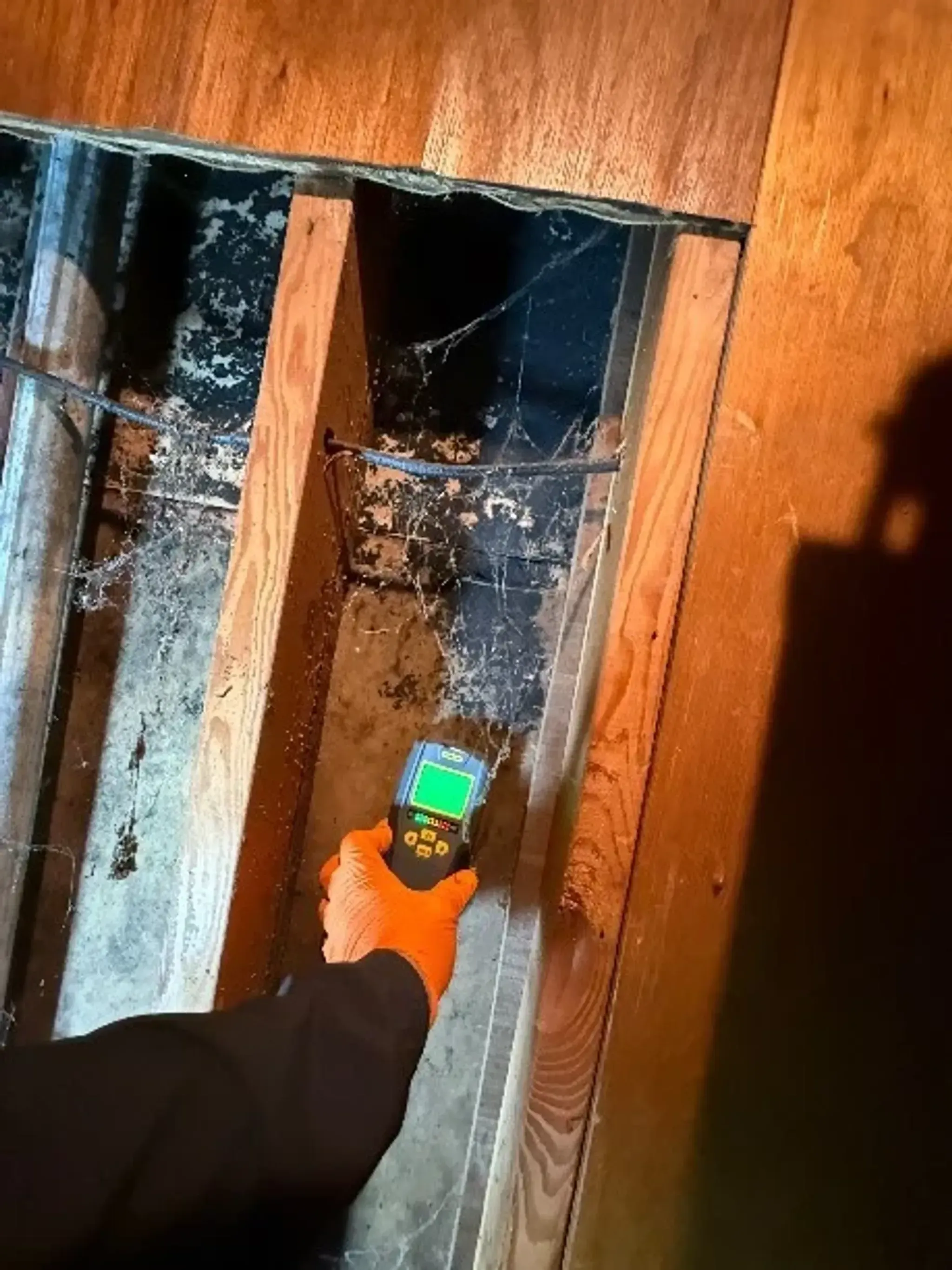

If you are looking for a black mold inspection in NYC, you want a clear answer. You also want to know what you can do next.
A professional inspection will not instantly spot toxic mold just by looking. What it does is document what is there, measure the space that is affected, check where moisture is, and show where the problem is probably coming from. This way, the next thing you do (repairs, cleanup planning, talking to your building owner, or talking to HPD) is based on real facts, not guesses.
Key highlights
-
People often use the term “black mold” to talk about dark spots they see. But the amount of moisture and how big the area is matter more than the color.
-
In a lot of NYC buildings, Local Law 55 says owners have to fix mold problems and what leads to them. They can’t just paint over the mold or simply clean it.
-
If an area with mold is big (like 10 square feet or more), NYS Labor Law Article 32 can change the way people check and get rid of it.
-
A good inspection means taking pictures and mapping out moisture. Testing gets used only if it is needed to answer a certain question.
-
HPD inspections are for rule enforcement and often check what you can see. A private inspection can also measure things, take moisture readings, and give you a detailed report.
If you want to get an independent check that is only an inspection, you can set this up with Fast Mold Testing New York City.
What NYC Residents Call “Black Mold”?
Most people talk about “black mold” when they see dark spots on walls, ceilings, caulk, window frames, or near AC sleeves. A lot of molds can look dark. Sometimes, it is not even mold. It can just be an old stain or dirt that builds up where moisture stays.
People often have questions about "toxic mold." The simple truth is you cannot tell which kind it is or what the health risk may be just by seeing it. Even if you get test results from a lab, the main thing does not change: mold needs water to grow. If things stay wet, mold will keep coming back.
In NYC apartments, focus on four questions:
-
Is the area small or big (in square feet)?
-
Is there something adding moisture (leak, water intrusion, condensation)?
-
Is it able to hide behind finishes (baseboards, inside walls, under flooring)?
-
Do you need documentation that helps in a dispute?
What a Mold Inspection Can Confirm in NYC
Think of an inspection as a decision tool.
An inspector can usually confirm:
-
Where moisture is found and how far it goes
-
What building system is most often involved (plumbing, roof, windows, HVAC)
-
How much space is affected (measured in square feet)
-
If the pattern looks like condensation, a one-time leak, or ongoing water getting in
-
What details a contractor needs to fix the problem and take care of any damaged materials
An inspector usually cannot confirm:
-
The exact kind based on color alone
-
If mold is “safe” or “unsafe” just from a photo
-
The full plan to fix it without knowing what’s wet behind walls or surfaces
Strong reports put the most focus on where the moisture is, how much area is affected, and what should happen next.
NYC Rules That Can Change Next Steps
NYC mold problems often have two parts. The first is city housing rules. The second is the state’s mold license rules for bigger work.
Local Law 55 and the Underlying Defect
Local Law 55 is part of NYC’s rules for indoor allergen hazards. In most multi-unit buildings, the law says owners must make sure the apartments do not have mold. Owners must also fix what is causing the mold in the first place.
In simple terms, if you do not fix the moisture problem, the clean-and-paint method may not work.
HPD Violation Classes and Timelines
HPD uses classes for the things that do not follow the rules, and each has a different time to fix. This fixing time is important. It helps owners choose what to fix first. It also helps people who live there know what they need to document.
|
Class |
Type |
Time to correct from notice before civil penalties may apply |
|
A |
Non-hazardous |
90 days |
|
B |
Hazardous |
30 days |
|
C (mold) |
Immediately hazardous |
21 days |
These timelines show what can happen, but they do not promise that HPD will see these things in every apartment. This is why it can be useful to have your own records.
Article 32 and the 10 sq ft Threshold
New York State Labor Law Article 32 creates rules for who can get a license for mold work. It also has rules for the way the work needs to be done in mold assessment and mold cleanup. The law says the person who checks the mold and the person who cleans the mold on the same job should not be the same.
A typical limit is 10 square feet of mold. If you find that much mold, you might need a more formal way to handle it. This is even more important in big buildings or if you have licensed professionals do the job. Your inspection report can help show what needs to be done, so the right work is done safely.
HPD Inspection Versus a Private Inspection
HPD inspections are often done to make sure rules are being followed. They mostly check what they can see.
A private inspection can look at the problem with moisture. The inspector can check the area, take moisture readings, and give a written report. This report can help plan repairs, compare prices, or help you if there is a disagreement.
What a Professional Mold Inspection in NYC Includes
A good local expert should explain the process in clear words. They should tell you what they will do, what they will measure, and what you will receive afterward.
Step 1: Visual Inspection and Documentation
The person checks for things you can see that show there is growth or water damage. They look for signs like paint bubbles, warped or soft materials, and deteriorated caulk. They take photos and note where they find these things. This helps make sure the report can be used later.
A careful check looks at the whole picture. It includes things like leaks that happened in the past, plumbing close by, outside walls, and problems with air flow. These hints help people tell the difference between condensation and leaks that are still happening.
Step 2: Measure and Map the Affected Area
Square footage matters in NYC because it can change how people see the problem and how they fix it.
A close look helps to find visible mold or water damage and tells you what else could be affected that you cannot see. A small mark near the baseboard can mean there is water under the floor or inside the wall.
Step 3: Moisture Mapping and Source Checks
Moisture mapping is what helps stop repeat mold.
Inspectors often use a non-invasive moisture meter to check surfaces. They then confirm readings where needed. A thermal camera can help find odd patterns, but it should be checked again with moisture readings. Looking at humidity and temperature helps a lot, too. This is true in winter, when cold outside walls and windows can lead to moisture building up.
The answer you need is clear. You want to know what is wet, why it is wet, and what should change so it will not come back again.
Step 4: NYC Spots Inspectors Check Early
NYC buildings often show the same moisture problems again and again. Inspectors go to check:
-
Under-sink cabinets and places where pipes go through
-
Bathrooms with weak fans or vents that do not move air much
-
Window sills and outside walls (in winter, when moisture from the air settles)
-
Steam heat risers and pipe chases in older buildings
-
PTAC sleeves and places where water drains in newer buildings
-
Top-floor ceilings by the roof and edge parts
If the problem is a smell that moves from one place to another, people may also look at shared chases and openings where air can move between units.
In many cases, inspections are triggered by violations tied to NYC housing laws—see our guide to the NYC 10 sq ft mold violation rule for legal context.
Mold is everywhere and is often found in predictable areas review our NYC mold hotspots in apartments guide to identify high-risk zones.
How Do Inspectors Test for Mold in NYC?
You do not always need to test. Testing is a tool you use when you need a clear answer for a question.
When Testing Is Usually Not Needed
If you can see mold or notice a strong musty smell, then there is a real moisture problem to address. In most cases, the most important things are to fix the moisture source and deal with damaged materials.
You do not have to wait for a lab result to fix a leak or address active water.
When Tests Are Useful
Testing can help when it leads to a different choice, like when:
-
There is a lasting smell but you do not see anything growing.
-
You need someone to check conditions after cleanup.
-
The problem is not solved or it comes back again, and you need better records.
What Testing May Look Like
Depending on the question, a professional may use air samples with an outdoor sample to compare against. They may also use tape lifts or swabs to find out if a stain is mold. Targeted cavity sampling will only be done when there is a good reason for it.
Air testing does not give a clear pass or fail answer. It is just one piece of information. You also need to look at moisture results and the story of the building. All these things matter when you try to know what is going on.
What to Do After the Inspection
An inspection should make the next step clearer.
-
If the report shows that there is an active leak or wet building materials, you should stop where the water is coming from, dry out that part, then fix what got damaged.
-
If you see signs of moisture forming on cold surfaces, you can often fix it by improving ventilation, lowering indoor humidity, and dealing with cold wall and floor issues.
If the area that needs help is big, treat it like a project. Use the plan to compare bids. After the job is done, plan for checking and cleaning the area.
If you’re a tenant, this report helps you communicate clearly. It shows the location, size, and moisture facts. These things make your written notice much stronger.
NYC Quick Checklist
For Tenants
Take photos of the area and note the dates. Send notice in writing. Ask what is making the place damp and how they will fix it.
If the mold was just cleaned or painted over and it came back, make a note of this. Repeat growth often means the moisture problem was not fixed.
For Landlords and Managers
Treat mold as a sign of a moisture problem first. Find out how much area is affected and write it down. Fix what is causing the water issue. After that, take care of anything that was damaged.
If you see a large area of mold, usually more than 10 square feet, you need to plan the work. Make sure the assessment and cleanup are handled the right way. This will help you avoid problems.
Questions to Ask Your Inspector
-
Where did you get the highest moisture readings, and what do they show?
-
Where does the moisture seem to come from?
-
How big is the measured area that is affected (in square feet)?
-
What repairs or trades do you need most to fix the problem?
-
If testing is recommended, what will the test help you decide?
FAQs
Can you tell if it is “toxic” black mold just by looking?
No. The color can't tell you the kind or any health risk. Treat any mold you see as a sign of too much moisture. You need to fix that problem.
How do inspectors test for mold?
They most often begin with a visual check and moisture mapping. More tests might be done if there is a need to find out something, like hidden mold or whether cleanup was successful.
Do I need a mold test if I can see mold?
Most of the time, the answer is no. If you can see mold, you have a good reason to fix the moisture and take care of damaged materials.
What if the mold is behind a wall?
Moisture mapping can help you find areas that might have moisture problems. A worker can help you plan where to open up the area, so the work stays on target and you do not have to take apart things at random.
Will cleaning it myself affect results?
Yes, it can. Scrubbing can remove what you see on the surface, but it will not fix moisture problems. If you want help from a professional, take a photo of the spot first. Try not to disturb the area until someone checks it.
What should I look for in mold inspectors in my area?
Look for work that checks for moisture, provides clear measurements, and a written report you can use. Be careful if the same company tells you to do extra work that they also want to sell you.
Final Word
Most “black mold” problems in NYC start with a moisture problem. A good inspection will tell you how big the problem is, what moisture was found, and what you need to do next.
To set up an inspection where they check for mold but do not do any cleanup, go to Fast Mold Testing New York City. For help on how mold can affect your health at home, read NYSDOH Mold and Your Home.
Related reading
Frequently Asked Questions
- What is the difference between an HPD mold inspection and a private mold inspection in NYC?
- An HPD inspection in NYC writes down any visible housing code problems and gives the owner a ticket. A private mold inspection from Fast Mold Testing does more. It checks for wet spots, takes air samples, and gives a full report. This report shows how big the problem is and can help with legal work or fixing the issue.
- How much does an independent mold inspection cost in New York City?
- The cost for an independent mold inspection in New York City is usually between $500 and $800 (more for extensive inspections). The price depends on factors like apartment size and lab sampling. With Fast Mold Testing, the service starts at our transparent rate. Results are often ready in 1 to 2 business days. This is from a company that does not also do mold cleanup, so there's no conflict of interest.
- Does NYC Local Law 55 require my landlord to hire a professional for mold over 10 square feet?
- Yes, NYC Local Law 55 says that your landlord must hire a licensed mold assessor and a different licensed company to clean up the mold when it covers 10 square feet or more. The company that checks for mold and the one that cleans it up cannot be the same.
- Can I withhold rent in NYC if my landlord ignores a mold problem in my apartment?
- People who rent in New York should not stop paying rent for mold on their own without getting legal help. You can file an HP Action in housing court. This will make your building owner fix repairs under court watch. A report from a professional mold inspection with moisture data and photos will make your case much stronger.