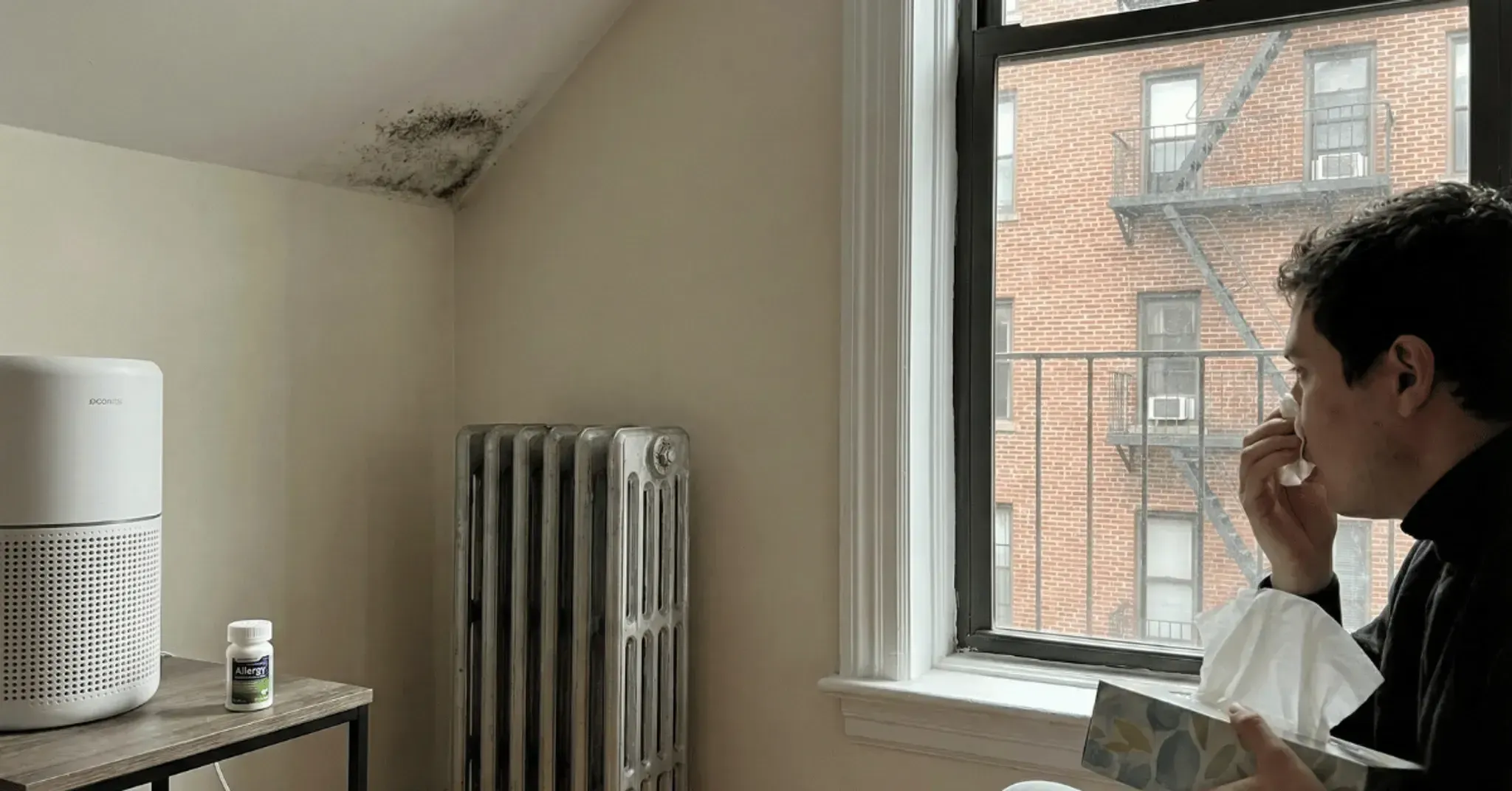

You have been taking Claritin when you get up each day. You got a new air purifier for your home. You stayed inside when there was a lot of dust in the air.
But the stuffy nose does not go away. The pain keeps coming back again and again. Every night your throat feels dry and scratchy.
NYC's allergy season starts in March and lasts until October. After that, by November, the amount goes down almost to nothing. If you feel blocked up in December, it's not because of it outside. Something inside your apartment is causing this. Each year, thousands of NYC renters find out from mold testing that indoor mold is the real problem.
Mold Doesn't Follow a Season
People with pollen allergies get a break at some times during the year. Mold allergies do not. Mold sends out its spores inside your home all year. It does not follow a set time. Mold grows wherever there is water.
NYC apartments make a lot of water in the air. Steam radiators send wet air into old buildings through the winter. Many bathroom fans do not send the air outside. Water gathers on cold walls every time the heat is turned on.
A RentHop study of 311 data found New York City had 36,178 mold complaints in 2024. That is 59% more than the last year. The Bronx, Brooklyn, and Manhattan all broke past numbers. These complaints only count the people who called in. A lot more people think pollen is to blame.
How to Tell the Difference
Mold allergy signs and pollen allergy signs are a lot alike. You may get a stuffy nose. Your eyes can feel itchy. Your nose may run. You might feel tired. There can also be postnasal drip.
The Asthma and Allergy Foundation of America lists the same reactions for both things. Your body will let out histamine each time.
But the pattern is different.
Pollen symptoms can get worse when you are outside but get better when you go inside. Mold can cause the opposite effect. You feel good when you are on the subway. You also feel fine while you are at the office.
You get back to your home, and after an hour, your nose gets blocked. When you spend a weekend in another place, you feel fine and breathe well. But as soon as you come back on Sunday night, the problem comes back again.
Try this for one week. Rate your symptoms from 1 to 5, three times each day. Do this in the morning at home, at midday away from home, and in the evening at home. If you see your numbers are higher when you are at home, you may have an indoor trigger. The National Institutes of Health says that 3 to 10% of people in the general population have a mold allergy. In NYC apartments, the most common year-round indoor airborne allergen is mold.
Why Your Medication Keeps You Stuck
Antihistamines also help with how you feel when you react to mold. Your body reacts to mold spores in a way that's a lot like how it does to pollen. If you take Zyrtec or Claritin each day, you will feel a little better. You might not feel great, but you will feel better than before.
That small relief keeps you stuck. You think the medicine works for your "bad allergies." You do not ask why you feel this way. You spend another winter thinking you just stay stuffed up all year. At the same time, mold behind your bathroom tile or in your PTAC unit keeps making spores.
World Health Organization report on indoor air quality says that around 21% of asthma cases in the U.S. could be linked to damp places and mold. A lot of people do not know when there is mold in the home. They often see that their inhaler does not help as much, or notice that their child’s asthma gets worse after moving to a new place.
If your symptoms began or started to feel worse after something happened, like a leak, a storm, or moving to a new place, you should notice that. If your symptoms do not get better with medicine you buy at the store, then when things started matters more than counting what's outside in the air.
Why NYC Apartments Are Especially Bad for This
Every city has some mold. But in NYC, the buildings make certain things happen that you should know about.
Pre-war buildings use steam heat. Radiators send hot, wet air into old pipes and then to rooms that have windows with only one layer of glass. There is a temperature gap between the warm air inside and the cold wall outside. This brings water droplets in the room. That water gets into the plaster and gathers behind baseboards. It helps mold to grow where you will not see it from across the room.
Newer high-rise buildings face a different problem. The tight way they are built and the windows that stay shut help save energy. But, these things also cut down on air moving around the space. PTAC units, which are the box-shaped heaters and coolers on the walls, hold water in their drain pans and on their coils.
If you do not clean them often, they will turn into sources of mold. They can send spores right into your room. For this reason, some companies now prefer going to new buildings for mold clean-up more than old buildings. A lot of building materials now break down fast when they get wet.
Both types of buildings have the same issue. The bathroom air system is not good. If the fan in your bathroom does not blow air outside, which is very common in NYC, the damp air from each shower gets stuck in the ceiling. The EPA says mold can grow on a wet place in just 1-2 business days.
When Mold Testing Makes Sense
Symptom tracking lets you know when there is a problem. Air testing helps you find out what is causing it.
A professional mold inspection takes air samples inside your place and checks the mold spore levels against those outside. If the count indoors goes up a lot, or if types like Aspergillus, Penicillium, or Stachybotrys turn up in big numbers, you get a real answer. This is not just a guess. You have real lab data.
That data is important for two reasons. It helps the company know what to fix. It also gives you proof that your place needs work, so the person you rent from can't just ignore it.
Under Local Law 55, landlords in NYC who have buildings with three or more homes must keep places free of mold and fix what is making the problem. If you complain and only say you feel “bad allergies,” then it is easy for the landlord to ignore you. But if you show them a lab report that says there is a lot of Aspergillus in the bedroom, they take action.
New York State says that the company that does the testing should not be the same as the company that does the cleanup. This rule helps make sure the person doing the test has no reason to make the problem sound worse than it is.
Can mold allergies develop suddenly in adults?
Yes. You can live in a place for years and not feel any symptoms. Then, a new leak or a change in how air flows in the building can bring enough wetness for mold to start growing. When there are a lot of mold spores, your body starts to react. People who did not have allergies before can get them after there is water in their building. If you started to feel sick all of a sudden, think about what changed in your apartment at that time.
Do air purifiers help with mold spores?
They can make the number of spores in the air go down, but they do not get rid of where the problem starts. A HEPA filter can trap spores that are in the room, but it will not stop the mold hiding in your wall from making more each day. Using an air purifier can help you feel better until you decide what to do next. Still, it cannot take the place of finding and getting rid of the mold by hand.
If I have seasonal allergies already, can mold make them worse?
It can. Your body is already set to react too much to things in the air. When you add mold spores to a sensitivity you have already, your body has to handle more. This is why some people feel like their allergies are getting worse each year. The time of year may be the same, but mold inside the house is adding to the problem all the time.
Stop Treating What You Should Be Testing
If you notice the pattern leads indoors, an antihistamine will not solve the problem. The issue is not in the air outside. It is in your walls.
One checkup can give you what many months of allergy pills cannot: a clear answer. If you have mold, you will know what kind it is, where it comes from, and if the person who owns your home should fix it. If it's not mold, you can stop worrying about that and look for another cause.
Book a mold inspection with Fast Mold Testing. You can get a same-day appointment. The lab will give results in 48 hours. They do not try to sell any extra services.
Related reading
Frequently Asked Questions
- How can I tell if my NYC apartment allergies are caused by mold rather than outdoor pollen?
- The key indicator is whether symptoms improve when you leave the apartment. If your congestion, coughing, and eye irritation get better outdoors or in other buildings but return when you come home, the trigger is likely indoor air quality rather than outdoor pollen. A professional air quality test from Fast Mold Testing that compares indoor spore counts to an outdoor control will confirm whether indoor mold is the cause.
- What mold types in NYC apartments most commonly cause allergy symptoms?
- The mold types that most commonly trigger allergy symptoms in NYC apartments are Cladosporium, Penicillium, and Aspergillus species, which are widespread in water-damaged building materials. Stachybotrys causes more severe respiratory reactions and is found in apartments with chronic moisture problems. A lab report from Fast Mold Testing identifies which species are present and at what concentrations, giving your allergist the data needed for targeted treatment.
- How much does a mold air quality test cost for a NYC apartment where allergies won't go away?
- Mold air quality testing in NYC apartments for persistent allergy investigation typically costs between $500 and $800 (more for extensive inspections). Fast Mold Testing starts at our transparent rate with results in 1 to 2 business days. The test includes an outdoor control sample so you can see whether your indoor spore levels are significantly higher than the outside environment, which is the measurement that matters most when determining whether your apartment is causing your symptoms.
- If mold is confirmed in my NYC apartment, can I break my lease without penalty?
- In New York City, confirmed mold that renders an apartment uninhabitable may support a constructive eviction claim, which could allow lease termination without penalty. This requires documented evidence that the landlord was notified and failed to remediate within a reasonable time. A certified mold inspection report from Fast Mold Testing combined with written notice records is the foundation of any constructive eviction claim in NYC housing court.