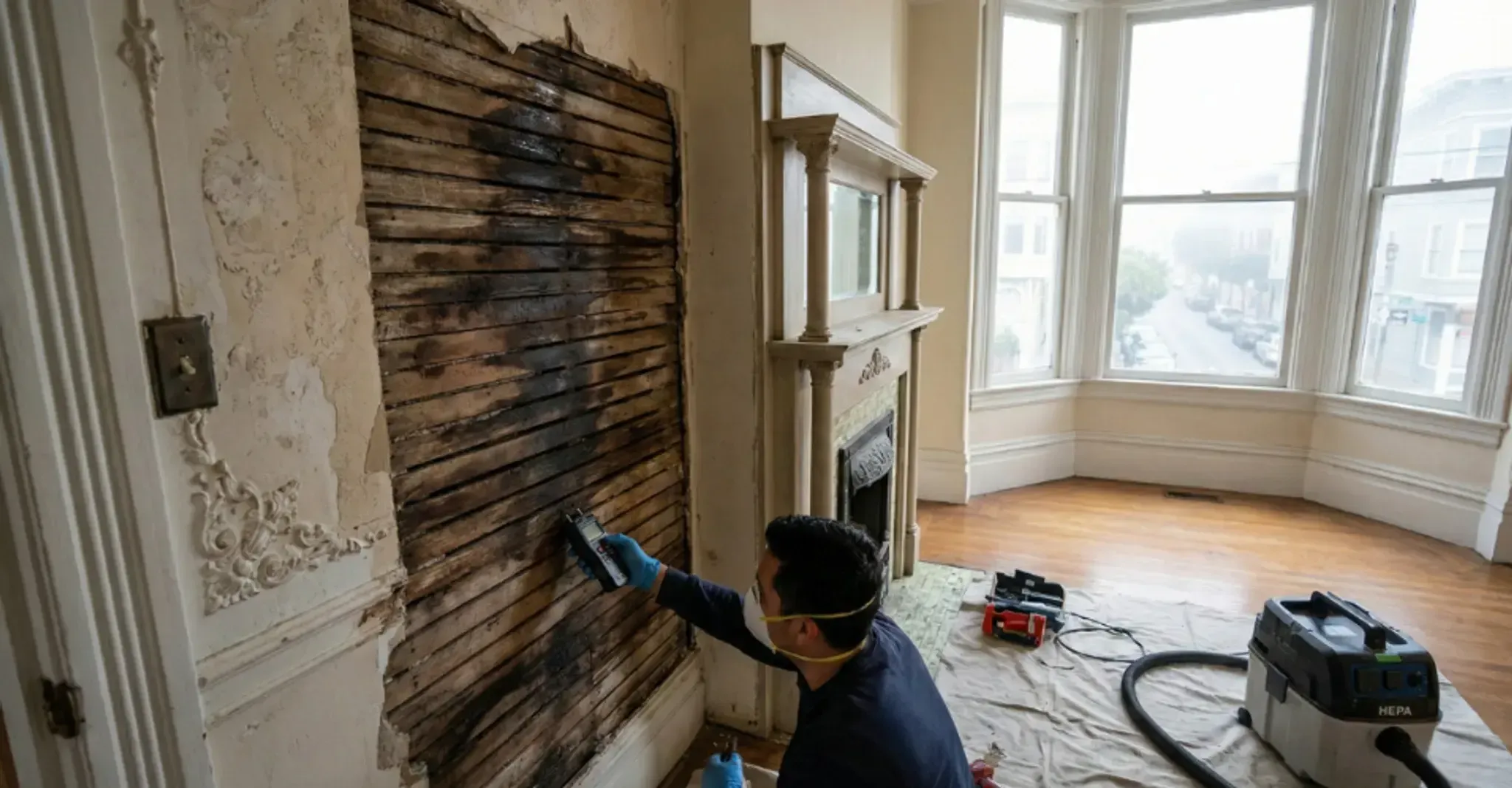

San Francisco is known for the old Victorian and Edwardian homes. These houses have been there for more than 100 years. They have faced big earthquakes and storms and still stand strong. But the heavy rain that came in December and January was different. The problem now is not just water coming inside. It is how these old homes keep moisture in spots that you do not see.
Why Victorian Homes Handle Water Differently
Victorian and Edwardian homes were put up from the year 1837 to the year 1910. At that time, there were no vapor barriers or new kinds of insulation. These houses had thick walls. The walls could take in water and then let it go a bit at a time. Big storms, though, are too much for this way of handling water.
The walls are made with lath and plaster. Thin wooden strips are nailed to the studs. Wet plaster gets put over the wood, and it fills small gaps. When the plaster dries, it forms things called keys. Plaster absorbs water fast, and not like drywall, it will soak up water but will keep its shape. The wall can look dry
Most Victorian homes do not have wall insulation. There is only a space between the plaster and the outside siding. When storms come, warm, wet air from inside goes through the plaster and touches the cold outside siding. Water starts to show up on the back of the lath. This is where mold can grow inside the wall, and you won’t see it.
Where Victorian Homes Leak During Heavy Rain
Box gutters are often a trouble spot on old homes. You may see these gutters a lot in Victorian houses, built right into the roof. They have troughs made of lead or copper. As time passes, maybe up to 100 years, these seams will crack. When a box gutter breaks, water leaks into the wall. You will notice water stains far below where the leak really is.
Many old drainage systems have downspouts that run inside the walls. Cast iron pipes carry the water. These pipes can crack when there is an earthquake. When it rains, water gets into the building walls.
Parapet walls bring another risk. Row houses have walls that go past the roof. When the wind blows rain, it can move under the flashing and go in through old mortar. If water gets in at the top of the wall, it goes down inside, into the wood frame.
Zero lot line construction means the buildings touch the edges of the land. There are narrow spaces between these buildings, and trash piles up in these gaps. Water can build up near the bottom of the walls. A lot of old foundations are made with brick or with weak concrete and do not block water. This can pull water up. This is called rising damp. The wood can rot. Mold can grow in basement areas.
Why Plaster Walls Hide Mold Growth
When the lath gets wet, it swells up. This swelling causes the plaster keys to break. The plaster may still look fine from inside your home, but it has pulled away from the lath. There is now a gap between them. This small dark and damp spot is a good place for mold to grow.
Plaster can keep water inside even when it looks dry on top. Most moisture meters check just the surface. They don’t find all the water hidden inside. A thermal camera shows cool spots where water is stuck. But it will not show what kind of mold is there. You need an air test sent to a lab for that.
Old insulation can be a problem. Some old Victorian homes have blown-in insulation. If this gets wet, it keeps water pressed against the wood lath. It stops the wall from drying out. Wet insulation makes the wall heavier. This can break old keys holding the wall together. When the keys break, you get empty spaces. Mold can grow in these spaces.
The Mold Removal Process for Historic Homes
Plaster removal takes careful work. When you break plaster, you get a lot of dust. Containment barriers need to be sealed tight. You have to use HEPA filters.
If the lath is solid and dry, it can stay. The plaster is removed until you reach the lath. The lath is cleaned with a wire brush. A solution that kills germs is used on it. You can put new plaster over the old lath if the lath is in good shape. But if the lath is rotten or mold is deep in it, the lath needs to be removed too.
Dealing with old homes can be hard. Many of these homes are in old parts of the city. Any change needs to be approved. Owners have to find a way to keep their homes safe from mold while following the rules for old buildings.
Box gutter repairs need skilled workers. This job should be done before you start removing anything inside. If not, leaks will keep happening. The best way to fix rising damp is making the ground around the house drain better. Putting sealant on brick will just hold the water inside. A better plan is to help water go away from the base of your home.
Testing Requirements After Water Damage
Just looking at the wall is not enough. A lot of damage can be behind the plaster even if it looks fine. You need to use a moisture meter with deep probes. These probes go through the plaster and touch the lath. If you see a reading over 16 percent, there is a risk for mold.
Thermal imaging helps you find what the problem is. Cold spots often show trapped moisture in the walls. Small test holes help people look inside walls with cameras if there is a need.
Air quality testing is the best way. Spore traps grab mold floating in the air. A lab tells us what kinds there are and how many. We look at the number of mold inside and outside the building to see if there is a lot more inside.
Testing needs to be done at more than one stage in the project. The first round of tests shows if there is any contamination. Tests done in the middle help check if everything is being contained right. The last tests check if it is safe. A person from outside the company will do these tests. The contractor should not test for their own work.
Common Questions About Mold Removal in Historic Homes
Are plaster walls always ruined by water?
Not always. Plaster can get wet and still be okay if you dry it fast, in less than 48 hours. If the plaster stayed wet for a few days, there is a good chance that mold grew.
Can I paint over mold on plaster?
No, painting is not a good idea. Paint can trap moisture and mold inside the wall. You need to fix what is causing the moisture first. Take out the mold by hand. After that, clean the area well and let it dry. Only then you should paint.
How much does mold removal cost?
The cost depends on how much damage there is. If you just need to clean the surface, you may pay a few thousand. If you need to take out all the plaster, it can be much more. You could pay tens of thousands. It is best to get a few price quotes from contractors who have worked on Victorian homes before.
Do I need permits?
Maybe. You need a permit for big tear-down jobs. Historic homes might need more okays from people in charge. If you are taking out more than a little plaster, check with Building Inspection.
How long does removal take?
Plan for two to four weeks for a mid-sized job. Setup will take one day. Taking things out and cleaning usually takes from a few days to a full week. It might take up to a week to dry everything. The last testing step adds a few more days.
Protect Your Historic San Francisco Home
Victorian and Edwardian homes are real treasures. But their age makes them easy to damage. Plaster walls can hide water and mold inside. Box gutters can start to leak into the walls. Damp can rise up and get into the base of these homes. Big storms can make things even worse.
If you want to get mold out, you need to think about all these things. Testing is very important because looking can miss what is hiding. Make sure you schedule your mold inspection in San Francisco with Fast Mold Testing. Their team will give your old home an expert look over.
Related reading
Frequently Asked Questions
- How does mold remediation in San Francisco Victorian homes differ from modern construction?
- San Francisco Victorian homes have old-growth wood framing, original plaster walls, decorative millwork, and historic hardware that require careful handling during mold remediation. Standard aggressive remediation techniques like wire brushing and chemical fogging can damage irreplaceable materials. Remediation in Victorians requires moisture mapping to limit scope precisely and targeted treatment protocols that preserve historic fabric while eliminating mold.
- How do I find a mold contractor in San Francisco who can work on a Victorian without causing damage?
- Start with an independent mold inspection from Fast Mold Testing that documents exactly which areas are affected and which are not. This prevents over-scoped remediation that removes sound historic materials unnecessarily. When selecting a remediation contractor, verify they have specific experience with San Francisco Victorian construction and can provide references from similar projects in the city.
- How much does mold remediation cost for a Victorian home in San Francisco?
- Mold remediation in San Francisco Victorian homes typically costs between $5,000 and $40,000 depending on the scope, the sensitivity of affected materials, and access challenges. An independent pre-remediation inspection from Fast Mold Testing starting at our transparent rate ensures the contractor scopes the job correctly, targeting only genuinely affected materials and protecting original historic elements that should not be disturbed.
- Can San Francisco Victorian homes with mold still qualify for historic preservation status?
- Yes, mold remediation does not disqualify a San Francisco Victorian from historic preservation eligibility as long as character-defining features are preserved during the process. The key is using targeted remediation based on precise moisture mapping from Fast Mold Testing rather than broad removal that destroys original materials unnecessarily. Documenting the pre-remediation condition and the treatment methods used also protects the historic record.