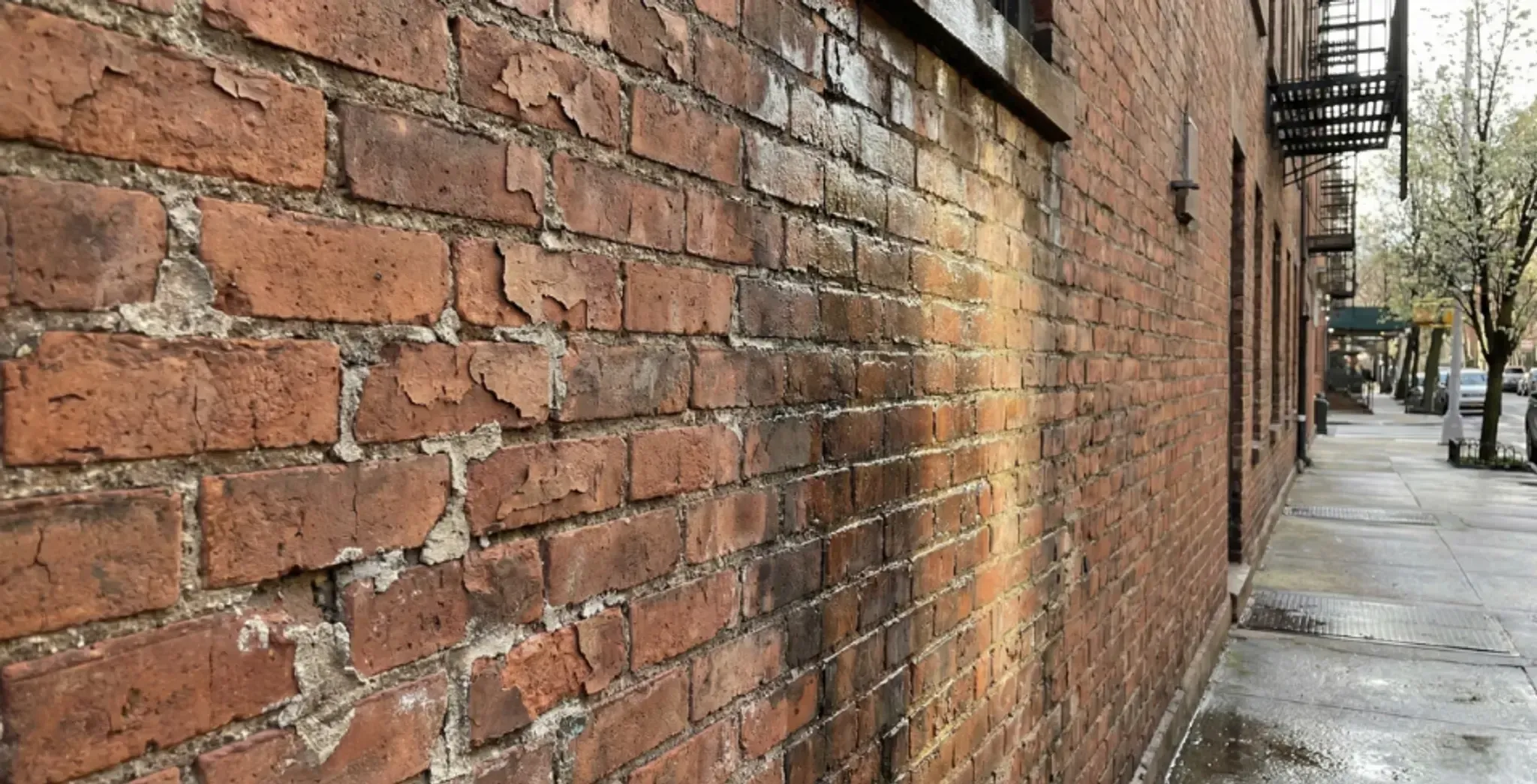

NYC brownstones and brick buildings often deal with water problems that change throughout the year. In winter, freezing and thawing makes cracks in the brick walls and joints. Spring sun makes water move through the brick and into the inside walls. When you start to see paint bubbles on your inside walls around late April or May, let yourself know the damage has been happening for a while.
To understand why, you need to look at water in two forms, ice and vapor. Both of these make pressure that old stone walls can't take.
How Freeze-Thaw Destroys Brick
Water grows about 9 percent when it turns to ice. In an open cup, the ice just gets higher. In small brick holes, the ice pushes against the sides. NYC gets both above and below freezing many times each winter. Each time this happens, it hurts the brick a little more.
Real damage comes from the pressure of ice crystals. When ice grows in big holes, it pulls water from smaller holes close to it. This makes the crystals get bigger. Then, there is more pressure than the brick can take. The brick cracks from the inside.
Damage does not always happen right when it gets cold enough to freeze. It depends on how wet the brick is. Critical saturation for most historic NYC brick is usually between 75 and 85 percent of pore space. If water stays below this, the 9 percent increase has room in air spaces. If the water goes over this number, the added size will break the brick.
Here is how it happens. Water gets in through rain or snow. When the temperature goes down, ice forms. Ice takes up more space. Cracks start to spread. Pieces from brick faces flake away. This is what people call spalling. Then, the ice melts and water moves deeper into the new cracks. This cycle happens many times each winter. Every time it happens, the brick lets in more water because it gets more porous. The next ice-up gets even worse. This is why there are flaking faces and broken mortar on Brooklyn rowhouses from the 1800s.
What Happens When Spring Sun Hits Wet Brick
Winter damage is easy to see and happens often. Spring brings another risk that many people do not know about. Sun vapor drive makes moisture move in the opposite way from what is normal.
In the winter, heat goes out from inside. The moist air indoors wants to go to the cold, dry air outside. But in the spring in NYC, the wet brick walls work as a moisture bank. After months of rain and melting snow, they hold water.
When the sun comes out in April and May, it heats the brick surface. Dark red bricks take in the heat from the sun. Surface temp can hit 120°F or more on sunny days. This heat causes a change in the water in the brick. The liquid water turns into high-pressure vapor.
At 120°F, the vapor pressure of water is around 1.69 PSI. Inside your home, where it can be about 70°F because of air conditioning in late spring, the vapor pressure is just 0.37 PSI. Vapor will move from the higher pressure spot to the lower one. The change from 1.69 PSI to 0.37 PSI causes water in the air to move into the wall and go to the cool inside.
This is not what you think will happen. The sunny outside makes your place warm and sends more water into it. If you use a finish on your inner wall like vinyl wallpaper or many coats of oil paint, water from inside can't get out into the room. It turns into water drops on the cool drywall or stays as gas behind the paint.
This makes paint bubble up on inside walls. The way paint sticks can be about 70 to 200 PSI. A value like 1.69 PSI may look low, but what happens is more about water moving through things. Salts in brick or drywall mix with water when it comes together from the air. This builds up small spots where the pressure can go over 100 PSI where the paint meets the wall. The paint lifts, and bubbles filled with water show up.
Why Brick Pointing Matters
Mortar joints can be the weakest part in a wall. In older walls, lime mortar is not as hard and takes in more water than brick. This is done on purpose. The soft mortar lets the wall move without cracking the brick. It also wears away before the brick does, which keeps the brick safe.
But if the mortar wears away too much, it does not do its job anymore. Water then gets into the deep cracks. When water freezes and melts, these cracks turn into small channels that go all the way through the wall. Wind and rain can then push water through these gaps and straight onto the inside surfaces.
Proper pointing needs mortar that matches the right hardness. If you use modern Portland cement on old brick, it can cause problems. Hard mortar does not bend or move. It holds the water in instead of letting it come out. When there is freeze-thaw, the pressure builds up with no way out except going into the brick. This makes spalling happen faster.
Tuckpointing should be done before the mortar gets deeper than a quarter inch. If you wait longer, the wall will not be as strong. Water will get in faster. If you wait too long, the repair will be bigger.
Why Interior Paint Bubbles
If paint bubbles up on a wall inside the house and there is brick on the outside, that has a clear cause. Most of the time, it means the sun starts to hit the outside bricks, and these bricks have stayed wet all winter. This problem often happens in late spring, when the weather gets warmer and the sun heats up those bricks a lot.
The bubbles hold liquid water. If you pop one, you will feel the wetness. This is not the kind of water you see on your bathroom walls. This water came in from outside. It moved through the brick, because the sun made heat and pushed it in. You cannot see this pressure when you are inside.
The fix is not just to repaint. That keeps the problem under new paint. Brick needs time to dry out. Inside finishes have to let vapor move through when things go back to normal. So, do not use vinyl wallpaper on brick walls that are outside. Also, try to not add too much paint. You need to know that your wall is not a perfect vapor barrier.
When to Call a Mold Expert
If you find bubbling paint, water stains, or musty smells close to outside brick walls, call a pro to check it. A quick look can help you spot clear mortar trouble and bricks that are chipping. But there can be hidden water that needs tools to find.
Moisture meters with brick settings help you see how wet the brick is. Images that show heat can help you spot how water moves through the wall. You can't spot this with your own eyes, but it will show up as parts with nice temperature differences on infrared.
Air testing helps to find out if there is mold in the air. Brick walls that stay wet for a long time often have mold inside the walls or on inside surfaces. Testing for spore counts can show if there is mold, even if you can't see it.
Testing should be done in the spring. This is the time when the sun heats things up and a lot of vapor moves through. You often see moisture at this time. If you test in winter, you might not see any moisture. This is because the vapor has not changed direction yet.
Protect Your NYC Brick Building
Freeze-thaw and sun vapor action make hard times for brick walls in NYC every year. A lot of building owners do not know why. In winter, the brick cracks. In spring, water gets pushed inside. Both of these need to be fixed before it leads to bigger trouble. Get your brick walls checked by people who know these changes each season. Contact Fast Mold Testing for a pro checkup of water in old brick buildings.
Frequently Asked Questions
- Why do NYC brick buildings develop mold inside walls during winter and spring?
- NYC brick facades absorb rainwater and snowmelt throughout winter. When temperatures rise in spring, that stored moisture migrates inward through the brick and mortar, hitting the cooler interior wall assembly. This creates a condensation zone inside the wall that persists for weeks, feeding mold on the back face of drywall and plaster where no one can see it.
- How do I know if my NYC brick building has mold inside the walls from winter moisture?
- Signs of winter moisture mold in NYC brick buildings include paint bubbling on interior walls in late winter or spring, a musty odor that appears in February through April, and water staining at the base of exterior-facing walls. A professional moisture meter scan of the wall during or shortly after a wet period is the most reliable diagnostic tool.
- How much does a mold inspection cost in New York City for a brick building moisture problem?
- Mold inspections in NYC for brick building moisture issues typically cost between $500 and $800 (more for extensive inspections). Fast Mold Testing starts at our transparent rate with results in 1 to 2 business days. The inspection includes moisture mapping along exterior walls and air sampling to quantify spore levels, which is the documentation needed for landlord demands, HPD complaints, or co-op board action.
- Can NYC co-op or condo boards be held responsible for mold from brick facade moisture infiltration?
- Yes. The building facade is a common element in NYC co-ops and condos, making the board responsible for its maintenance under the proprietary lease or offering plan. When facade moisture infiltration causes mold inside a shareholder or unit owner's space, the board's obligation to maintain the common element creates liability for the resulting damage. An independent mold report from Fast Mold Testing that traces the moisture source to the facade is the key evidence.