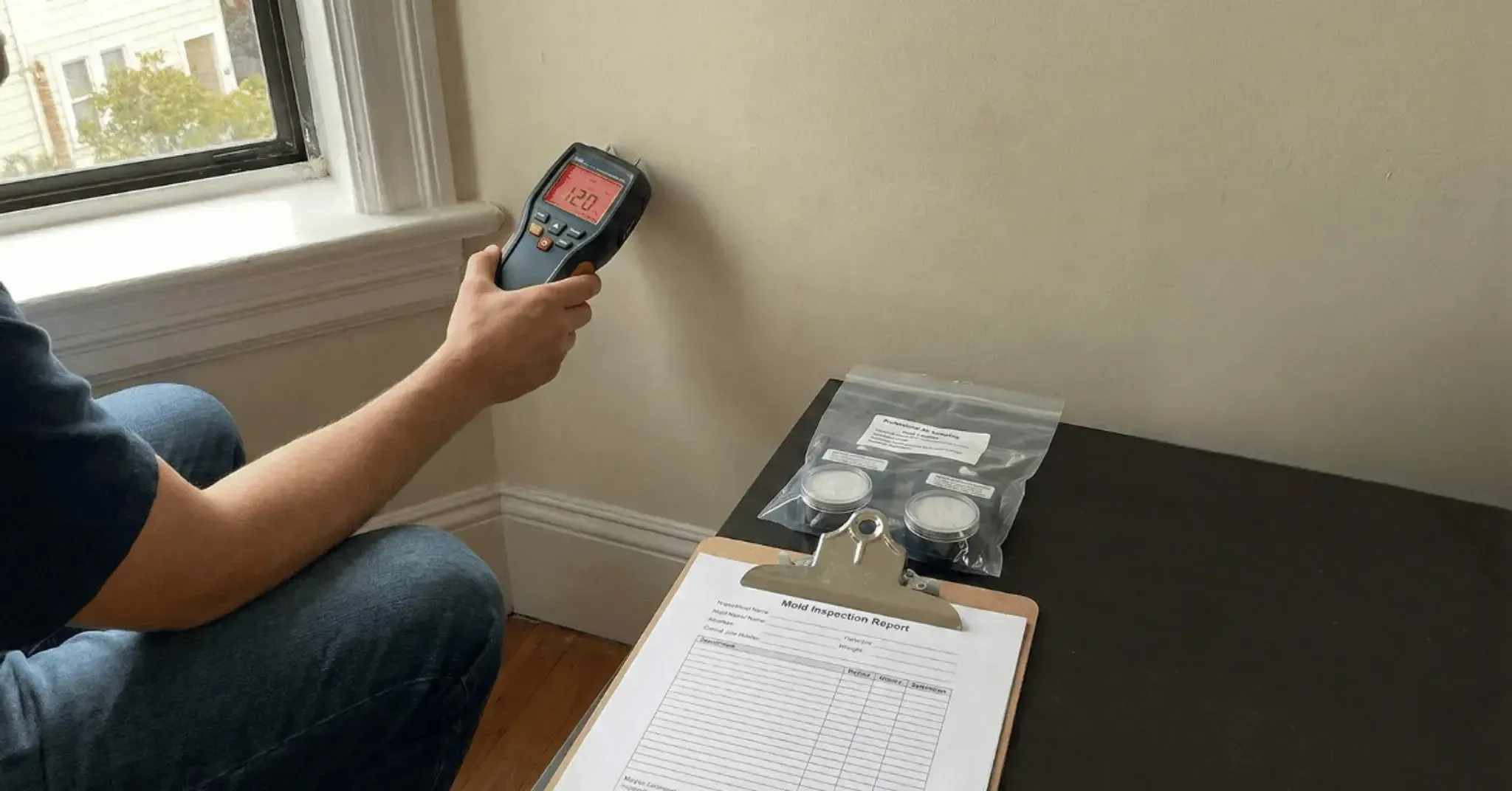

The DBI inspector was here. He checked everything. Then he left. He did not say anything was wrong.
You know the mold is there. You can smell it. Your sinuses feel bad ever since the leak last winter. But there was nothing you could show. The person checking the place left. Now, the owner uses that visit to say the unit is good.
DBI inspectors work to check housing codes. They are not trained to handle things like mold in the air or in closed spaces. They can spot the problems that are visible. If mold is inside the walls or in heating and cooling ducts, you may not see any marks on the outside. Someone who checks a unit may walk in, not spot anything, and report that things are fine.
Many people who rent don't know that the law says mold does not have to be seen. You still have more choices than you may think.
What SF Law Actually Says About Invisible Mold
San Francisco Health Code Article 11, §581 says mold is a risk for people’s health. The words in the code are important for you to know. It covers any mold that you can see or any mold that you can show is there inside buildings.
That part, "otherwise demonstrable," is important here. It means mold can be shown to be there in some way other than by just looking at it. A good way to prove this is with air quality tests done by professionals and lab reports from trusted labs. This is the kind of proof you get with that testing.
This is important because it changes how you look at things. You do not need a DBI inspector to see mold and have a reason for the law to be used. You only need to show it with papers that meet the law’s rules.
One thing to note is that California courts say mold test results need to use solid science if they are to be used as proof. The court did not accept results when tests did not meet this rule. That is why getting a pro, who is certified, to do the testing is much better than using a do-it-yourself kit you buy at a store.
Fast Mold Testing's lab-backed inspection reports are set up to match this rule, and come with full chain of custody papers.
DBI Is Not Your Only Option
Most renters in SF think the DBI is the only option for making things right. It is not. There are two more ways to take action, and both of them can happen without any help from the DBI.
San Francisco Department of Public Health. SFDPH deals with mold problems under the Health Code. It is not the same as DBI. SFDPH has its own rules for doing checks and making people fix issues.
According to SFDPH, their Healthy Housing Program handles more than 4,000 complaints about health in homes every year. Once a problem is found, property owners fix it quickly most of the time. You can report a complaint on SF.gov's 311 portal. If you have testing results from a lab, add them when you send your complaint.
The SF Rent Board. If you live in a building that is under rent control, you can file a Decrease in Services or Failure to Repair form. You can do this even if you do not have an inspection report from any agency. The Rent Board can lower your rent. This will last until your landlord fixes the problem. This system is the same for people living in all areas of San Francisco where there is rent control, like the Richmond, Sunset, Mission, Tenderloin, and SOMA. The Housing Rights Committee of SF gives free help. They can guide you with the Rent Board and Health Department steps.
Written Notice to Your Landlord Is Not Optional
Before any of these things can work, you need to have a written notice on the record.
Under California Civil Code §1942.4, the person who owns your building is not allowed to ask you for rent or try to make you move out if you have told them about big problems with your home that break the housing code. If they do not fix the problem within 35 days after you let them know about it, they can also be made to pay up to $5,000 in damages if you take them to court about how safe your home is.
The written notice marks the beginning of the process. Send a letter by certified mail that explains the mold problem. Use your lab results and ask for help with fixing it. Keep a copy of the letter for yourself. If your landlord says the DBI visit did not find anything wrong, your written notice with your lab tests shows another side of the story.
Note: If you live in an unpermitted unit or in-law unit in San Francisco, do not file with DBI. They might order to close the unit instead of making repairs. Instead, you should file with SFDPH and the Rent Board. The SF Tenants Union has some guidance for this.
Frequently Asked Questions
Can I use air quality testing as evidence of mold if there's nothing visible on the walls?
Yes. San Francisco Health Code §581 covers mold that is "visible or otherwise proven." Professional air quality testing with lab results meets the "otherwise proven" rule. The results should follow good science to be used in court. That is why testing done by experts with the right papers is important. See https://fastmoldtesting.com/san-francisco for what a court-ready inspection includes.
What if DBI already came and found nothing? Does that close my case?
No. A DBI visit with no problems found is not a legal way to say that your unit does not have mold. DBI inspectors look for things that you can see. A clean report from them does not cover things like mold in the air or hidden mold inside walls.
You can still file with SFDPH. You can also send your professional lab results to your landlord in writing. You can ask the Rent Board for help too. Each process is different from the others.
What's the difference between DBI and SFDPH for mold complaints?
DBI makes sure the San Francisco Housing Code is followed. They mostly look at things you can see or parts of buildings you can touch. SFDPH checks that people follow the San Francisco Health Code. This Health Code clearly includes mold as something that can be bad for the health of people. Both offices can give out Notices if the rules are not followed, but SFDPH is better able to act when they have health facts, like air quality data. A lot of tenants do not know they can file a complaint with both of these agencies at the same time.
Do I need a lawyer to use these options?
You do not need a lawyer to send your case to SFDPH or the Rent Board. But if you want to stop paying rent or ask for money under California Civil Code §1942.4, it is a good idea to talk with a lawyer before you take any steps. There are housing lawyers in San Francisco who help people who rent. They often give a free first talk. The Housing Rights Committee can help you find one.
The Inspector Left. The Problem Didn't.
DBI can't say what it doesn't see. This does not mean you do not have choices left. It means you have not tried the right options yet.
Mold that grows in your walls is still bad for your health, even if someone did not find it. The law will help you with this, but you must know which part of the law to use and what proof to have. Begin with air quality testing done by a good company, done the right way. After that, send a letter to your building owner. You should file your case with SFDPH, and not wait for DBI to get to you.
If the black mold testing San Francisco results show high spore counts, you know what the next step should be. That is when action starts.
Frequently Asked Questions
- What can I do if San Francisco DBI inspectors say there is no visible mold but I know it is there?
- If San Francisco DBI finds no visible mold but you have a musty odor and symptoms, get a private mold inspection from Fast Mold Testing that includes air sampling and moisture mapping. DBI inspectors are not mold specialists and rely on visual observation. An air sample that shows elevated indoor spore counts compared to an outdoor control creates independent evidence of a mold problem that DBI findings cannot negate.
- How do I prove invisible mold in my San Francisco apartment for a landlord dispute?
- To prove invisible mold in a San Francisco apartment, you need a professional air quality test from Fast Mold Testing that compares indoor spore types and concentrations to an outdoor control sample. Significantly elevated indoor counts, or the presence of mold types associated with water-damaged materials, constitute scientific evidence of a mold problem even without visible growth.
- What are my options as a San Francisco tenant if DBI closes my mold complaint without action?
- If DBI closes your San Francisco mold complaint without action, you can file a complaint with the San Francisco Rent Board if you are in a rent-controlled unit, pursue a habitability claim in San Francisco Superior Court, or submit a complaint to the City Attorney's office. A private mold inspection report from Fast Mold Testing with lab results is the evidence that makes each of these pathways viable.
- How much does a mold inspection cost in San Francisco for a tenant dispute with DBI?
- Mold inspections in San Francisco for DBI disputes typically cost between $500 and $800 (more for extensive inspections). Fast Mold Testing offers transparent published pricing with results in 1 to 2 business days. The report includes air sample comparisons to outdoor controls, moisture data, and written findings in a format that San Francisco Rent Board hearing officers and Superior Court judges recognize.