
A glass curtain wall often develops condensation during the marine layer. A week later, a tenant might notice a musty odor near the perimeter offices. The odor is strongest where the vinyl wall covering meets the window line.
In another building, a supply line failure in one suite showed up two floors below. Water migrated through floor penetrations. You can see a stain in the hallway, but the wet edge extends into several occupied rooms.
These are common problems you find in Los Angeles commercial buildings. You cannot fix them by just taking one air sample and making a guess. They require a coordinated plan that starts with moisture mapping and ends with a clear closeout package.
This guide shows you how to do commercial mold testing in Los Angeles. It helps you keep work running well and makes sure everyone works together. You will find out how to talk to the tenants and learn ways to check and compare bids. You will also avoid any surprises.
Key Highlights
-
If you see mold or notice a strong, musty smell that does not go away, you need to take action. You do not always need testing first.
-
Moisture mapping defines the wet edge. That helps you set scope and downtime.
-
California does not have one single mold inspector license. That makes your process and documentation more important.
-
In occupied spaces, plan containment and HVAC isolation before disruptive work.
-
After cleanup, get someone else to check the work. First, look with your eyes. If you take samples, compare them with outside air.
For more about local help, check out Fast Mold Testing Los Angeles.
What Commercial Mold Testing Includes In An Occupied LA Building
In many commercial buildings, when people talk about "testing," they are talking about the full process. It is more than a simple walk-through or taking just one air sample.
A good process starts with a clear walk-through. You need to write down the places you measure. You also take photos and point out what you find on the floor plan. You focus on checks that fit how most buildings in Los Angeles can fail.
When you see a stain on a ceiling tile, you should look above the ceiling. This can help you find out if water is coming into the plenum. You need to check the parts of the HVAC system, because that might be causing the problem. Take a look at the drain pans, the condensate lines, the insulation condition, and the return air paths. Do not stop at what you see on the tile. Look for other things that may be there.
Moisture mapping is the main step. You use it to find the wet edge, not just look at the marks you can see or where people say there is a problem. In buildings that have people in them, the wet edge helps you know where to open and check. It also helps you know where you should not open anything.
Sampling is used when it can change what you decide to do. For example, you might do a test to see if a dark mark is mold or just city dust. This is sometimes needed to have a base picture if you get into a disagreement with a tenant. It is also used to show things are clean after a professional fix.
The main thing you get is the written report. It also has what work needs to be done. If you work in or with buildings, you will use this document when you request bids. Your team will use it to keep track of the job. You will also keep it as your closeout file after the job is finished.
If you want a simple owner reference, the EPA overview can help you. You can find it here: EPA Mold.
California Compliance Reality Check For Commercial Sites
This is not legal advice. This is the practical reality that shapes commercial timelines.
First, visible mold is a serious condition. You should not try to solve it by testing alone, especially on porous materials like drywall or wood. If porous materials are contaminated, they usually need to be removed and the area cleaned safely.
Second, clear communication and tenant relations matter. When you work on leasing, tenant improvements, or getting someone to stay longer, people do not ask, “what kind was it.” They want to know, “is it fixed right, and can you show proof.” A simple and clear closeout package will help you give them these answers.
Third, workplace expectations are about things that happen every day. Employers need to fix any water that builds up inside and gets out of control. They also must pay attention when anyone says something about the air or room inside. There should be a way for people at work to report these problems.
Cal/OSHA rules can help you with what to do at your job. For health tips that are clear and not meant to scare you, use California public health links. Keep this resource handy: CDPH Mold.
For facilities teams, the lesson is easy to understand. Move fast when it comes to water issues. Start with your papers early. Think of checking everything as a way to lower risk. It is not just another step to follow.
When Commercial Mold Inspections Are Triggered In LA
Commercial inspections in Los Angeles often begin when there are problems like these.
There is a musty smell that keeps coming back, but you do not know where it is coming from. You might see stains happen again on ceiling tiles. These are often under HVAC zones or close to roof spots. Complaints can build up in one spot. Sometimes, water comes in and someone says it was dried, but no one checked with moisture readings. You may also find problems in the future when doing work behind wall coverings, casework, or walls that split rooms.
If you see your building here, think of it as one organized project. Do not see it as a group of small, quick fixes.
Los Angeles Moisture Drivers That Change The Scope
Los Angeles is a city that has many microclimates. The buildings there are not all built in the same way. What you need to do will depend on where the water enters and how air moves through the building.
Marine Layer, Vapor Drive, And Curtain Wall Condensation
Near the coast, cool wet air meets cold spaces inside where there is air conditioning. Curtain wall mullions, weak thermal breaks, and perimeter zones can get colder than the dew point. Condensation can form inside these assemblies, not just on the glass you can see.
This is where vinyl wall coverings matter. Vinyl can trap moisture behind drywall. At first, you may not see anything wrong. A smell can start, or you might spot some color change in one corner. When you open the wall, you may see the wet edge goes farther than you thought.
In these situations, you need to map moisture along the full perimeter run. Do not stop when you find the first spot where people say there is a problem.
Multi-Tenant Plumbing Cascades And The Liability Clock
In buildings with more than one tenant, water can migrate through pipe chases and other pathways. Water can also get in from slab penetrations and access points. A small leak can spread to lots of rooms and reach other groups who work in the building.
It is good to know what causes the problem because it will help people move fast. When you find out where water is, you can see the rooms that have gotten wet. You can also see where the water ends. This helps you know which areas to clean or fix.
Clear documentation can help you talk with the ownership, carriers, and tenants. It keeps these talks on topic. This helps the job not go on without an end.
Urban Heat Island HVAC Strain And Short-Cycling Humidity
Places that are not near the coast can be very warm in the summer. If you pick a cooling system based on the hottest days, the system may short-cycle when the weather is not as hot. The space can feel cool fast, but the humidity might still stay high.
If the air is wet, you may see things grow on the ceiling, on paper storage, on cardboard, and on insulation. This can happen even if there is not a leak. That is why you need to look at runtime patterns, weekend setbacks, and how the air moves in shared return paths.
Plenum Wetting From Condensate Management Failures
Problems with condensate can happen often and be a hassle. A drain pan may fill with water and spill. Algae can block the lines. Sometimes, the lines are not set the right way or the drains can come loose. These things can make the insulation over the ceiling wet.
The most common thing you may see is a tile that has a stain on it. The biggest problem can be wet insulation. You may also find the duct wrap is wet and the plenum space is damp. This area can send odor into paths that are shared for air return.
This is about how people work with each other, not just which tools you use. If you open the ceiling but do not close off the space and seal up the air system, dust and smells can go into other rooms. This may reach people who are in those rooms.
Assessment First: Moisture Mapping And Demolition Lines
The goal of the assessment is not just to look for mold. The goal is to define the wet edge and turn it into a plan you can share with others.
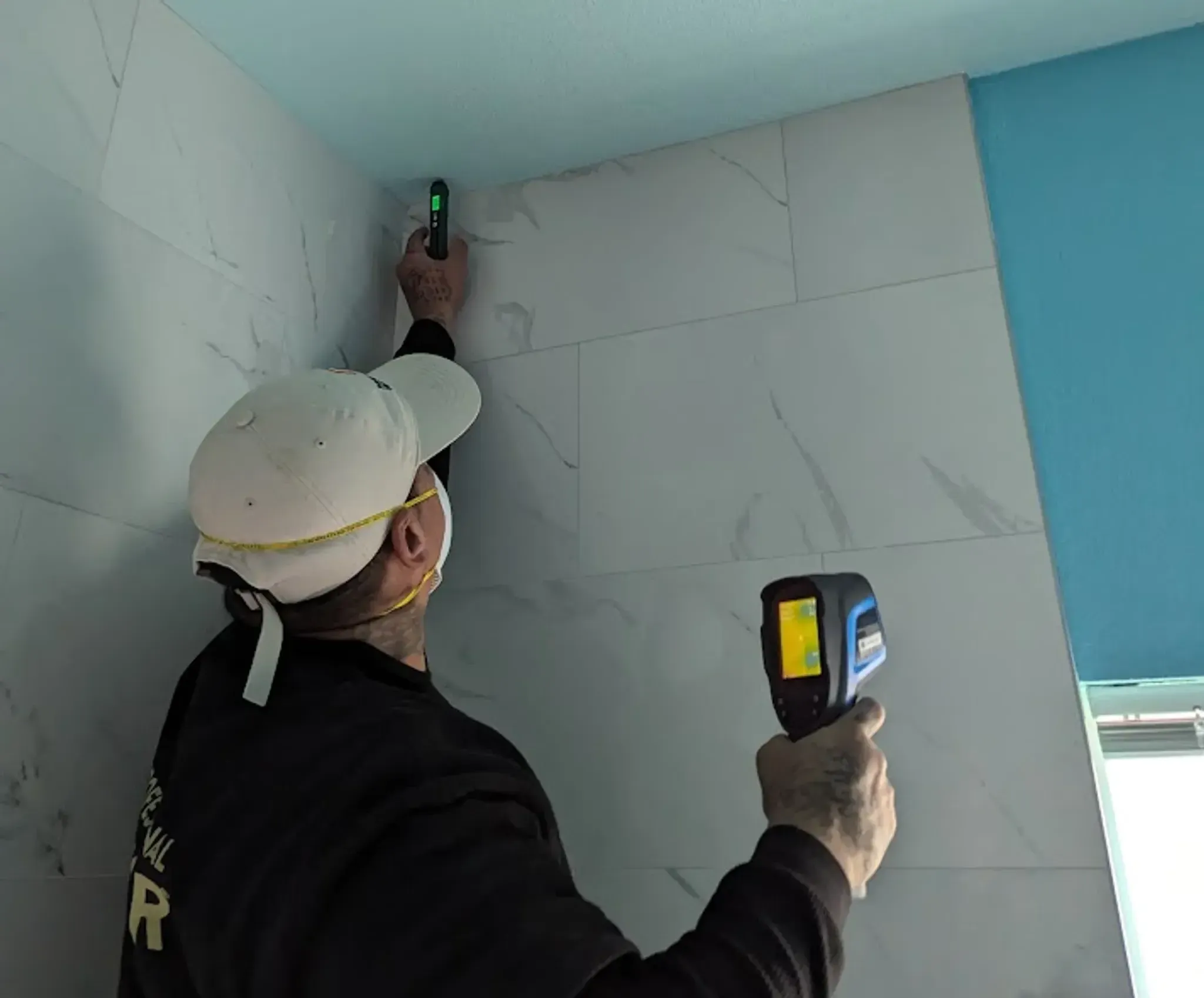
This way is used a lot. It starts with IR scanning to find problems. Then, you use a moisture meter to check those spots. A pinless scan helps you check a large area fast. A pin reading gives numbers that you can write down and use as proof.
Don't just look at the place where the problem seems to be. There may be more to the issue than what you see at first. Make sure to check other areas too. The first spot you check is not always the whole story.
This is how you set up demolition lines. When you take out the drywall, it does not always match up with where the stain is. You have to use moisture readings and check the wall to see how it looks and feels.
A tight job plan uses an easy rule that is simple to read. For example, you keep removing things until you do not find any more high moisture readings. The plan also makes sure you remove any porous things that you see are damaged. A rule like this helps lower bid drift, so people are not guessing when to stop working.
The person should also ask about how the HVAC system works. They need to see if anything is different on weekends, like if the air gets more dry or more wet. The person should check which areas have the same return air. These answers will help people know what to look at and where they need to fix things.
Sampling Strategy: Baseline, Confirmation, And Clearance
Sampling can help you when you have to choose how to do the work. It also helps when you need to write things down, or when you need to think about what might go wrong. This is not a thing that can take the place of moisture mapping.
Baseline Sampling For Disputes
Spore trap air sampling can tell you what is in the air at a certain time. It is good to look at results from inside and outside together. If you can, you should also compare these results with an indoor place that does not have any issues.
This helps with tenant communication. It shows you what is not the same in this area. So, you will not get a number and not know what it means.
Confirmation Sampling For “Is This Mold?” Questions
Tape lifts can be one of the quickest ways to check if a spot has mold or if it is just dust or soot. You can use this way when you see a weird color. Swabs are good to use when you need to test a spot that is wet.
If there is a risk, you need to keep a chain of custody. Use labels on the items and add a date. Write down where you find the item. Be sure you know who has handled it before you send it to the lab.
Clearance Sampling And Marker Spores
Post-remediation verification is often called PRV.
When you take samples, you have to read the results by seeing how they match with other things. Water damage can cause things like Stachybotrys and Chaetomium to grow. If you find these inside, it is not good. This is a warning sign, especially when they show up in meaningful amounts indoors.
Be practical when you try new ways to test. There are some tests that use DNA you can use. But these tests can be hard to read if people do not see things the same way. They may show things that are alive and things that are not. The best time to use these tests is when you know what you need from them and how to read what you get.
Using The Report To Compare Remediation Bids
Having a plan written down helps you see your prices in a better way. It makes it easier to check and compare all costs.
Bid on the written details, not just after a walkthrough. A bid after a walkthrough can change by a lot, because each person who gives a bid may think of a different way to hold or stop the work. Each one may also choose a different point to end the job.
Ask for easy steps in the bid. Do not use "treat" as a way to clean. If porous materials are contaminated, they usually need to be removed. For things that are not or only a bit like this, the plan should show every cleaning step. For example, use HEPA, wipe with a damp cloth, then use HEPA again.
Watch out when you hear sales words like "clean, kill, coat." Things like fogging and coatings do not take the place of real removal. You still have to get rid of things if there are materials that have tiny holes or if there is wet insulation.
Talk about things that may not be in the job right when you start. A lot of people forget things like work done after normal hours, using the freight elevator, moving your items, fixing the ceiling, and making sure of HVAC isolation. If you don’t point out these things at the start, you can have problems with your plans later.
What people say is important. Some companies say they are commercial mold cleanup pros. But the real thing to look for is if they give you a clear price and finish the set job. This is very important if there are still people in the building.
Coordination Model To Reduce Downtime
A commercial mold job will be faster if you plan the order and write down every change. This helps you stay on track and know what to do next. It also makes the work easier for people on the team.
Step 1: Stop Re-Wetting And Protect Critical Areas
First, you have to stop the water. Fix the leak right away. You also need to correct any ongoing condensation condition.
Start by making sure the most important areas are safe. These include IT closets, rooms with things that use electricity, places where you keep your inventory, work spots that have special products, and busy areas where many people walk.
Pick which parts need to keep working. This will help you know what to do next. It also shows where the limits are for the work.
Step 2: Containment That Fits Class A Spaces
Containment is there to keep people safe. In the workplace or a business, it also helps with how others see things.
You need to put up strong barriers in halls or places where a lot of people go by when needed. Before you take anything down, have a plan for cleaning and getting rid of waste. Doing this helps make sure trash bags do not end up in areas where people work or spend time.
If you have to keep the room under negative pressure, check it and note it down. The team for the place might ask for proof. They want to know if it stayed how it was supposed to be.
Step 3: HVAC Isolation And Dust Control
HVAC isolation can be the thing that makes a job go well or causes problems in a business place.
Seal all the return and supply openings in the work area. If you need, use lockout or keep things apart. This stops odors and small bits from going to other parts of the place.
You should also think about where the air goes out. Do not let dusty air blow to spots where new air comes into the building. Keep it away from where people walk.
Step 4: After-Hours Phasing And Change Control
Use nights and weekends to handle the hard jobs. At these times, you can open the ceilings. You can also take out any wet insulation. This is a good time to move all the debris.
Keep any changes to the scope down in writing. If you find there is something outside the demolition area, stop and have a look at the new wet edge. Next, update the scope in writing. After this, you can keep going.
That one rule helps stop the most common business problem. The work keeps getting bigger with no written note about what is new.
Post-Remediation Verification And Re-Occupancy
A defensible PRV process is straightforward.
First, you have to check if the area is clean. There should not be any dust on it. If you find dust, it means it does not pass.
Then check for moisture. If cavities or materials are still wet, the problem is not solved. This can happen even when it all looks clean on the surface.
If you are going to do clearance sampling, be sure to look at the place with your eyes and see if there are any wet spots first. When you read the results, see how they line up with the numbers from outside. Most times, you will find there are fewer spores inside than outside. The types you find inside should also be like those you see outside.
You need to keep good records to do this well. A closeout package must have its own PRV report. You have to add photos, the moisture map, and daily logs if these are needed. You also need to put in any records for disposal from your provider.
FAQs
Do You Do Commercial Mold Cleanup?
This page tells you how to look for mold and test for it at your job. The people who clean up mold are known as remediation contractors. A lot of buildings want one group to test for mold, and a different group to do the cleaning. This stops any one company from getting all the work.
What Do Commercial Mold Inspections Include?
Most mold checks at businesses start with a walk around the building. People also look and write down where there could be water. They make a simple list of steps to follow. They take samples if they need to. For example, taking samples helps find out if a spot is mold. Samples can also show that the space is safe after the job is done.
How Fast Can You Inspect In Los Angeles?
For buildings where people live, the speed depends on when you get in and how many spots need fixing. The main goal is to check everything fast, so water cannot get in anymore. This also helps vendors know what to charge, so they do not guess the price.
How Do I Find Commercial Mold Cleanup Services Near Me?
If you are looking to find commercial mold cleanup services near me, you should first ask if they will give a bid based on a written plan. It is also smart to ask how they make sure that the heating and cooling systems do not get affected. You need to know how they do their work in areas that people use.
Final Word
In Los Angeles, commercial buildings can see better results by doing a few simple things. First, they have to use moisture mapping. Next, they need to write a plan. It also helps to do the work in separate steps. At the end, an outside person should look at the work to make sure it was done right.
Book a time with Fast Mold Testing Los Angeles if you need mold testing for your business.
Frequently Asked Questions
- How should an LA facilities manager coordinate commercial mold testing without disrupting tenants?
- LA facilities managers should begin with moisture mapping to find the edge of the wet areas during normal hours. They should set up containment and take air samples during times when people are not around. Affected HVAC zones need to be kept separate. Managers should share timelines with tenants with written notes so the building stays open during the checkup and cleanup.
- Does California require a specific mold inspector license for commercial buildings in Los Angeles?
- California does not give out one mold inspector license from the state. So LA building owners should find people with ACAC or other third-party certificates and labs with AIHA approval, like Fast Mold Testing. They do check-ups only for big buildings in Los Angeles.
- How much does commercial mold testing cost for an LA office building or retail space?
- Commercial mold testing in Los Angeles usually costs between $1,500 and $8,000. The price depends on how big the building is and if HVAC and checks above the ceiling are part of the service. Waiting to do mold testing tends to be more costly because it can lead to tenant issues, lease problems, and other risks.
- What should a closeout package include after commercial mold remediation in Los Angeles?
- A full closeout package after Los Angeles commercial mold remediation needs to have the first assessment with moisture mapping, the cleanup work plan and proof that the work is done, independent checks after the cleanup by another company, lab results that are at or below outdoor base levels, and a final OK letter.